The Most Reliable 1.e4 Defenses for Black
TL;DR
- Seven openings on this site are genuine, verified responses to 1.e4 as Black, confirmed directly from each opening's actual first recorded move, not assumed from its name.
- Combined, these seven are built from 411,296 real games.
- Sicilian Najdorf has the largest dataset of the seven at 116,675 real games, and the widest recommended range (1600–2400), reflecting its reputation as a demanding, high-theory system.
- Scandinavian Defense has the lowest recommended entry point (400 Elo), making it the most accessible of the seven for a true beginner.
- Four of the seven have specific, real move-frequency percentages available; the other three are described using verified game counts and Elo ranges only, since a specific move-frequency figure wasn't available for those in this site's published content, and this article doesn't invent one to fill the gap.
- "Reliable" here means well-tested and well-documented in real games, not a claim about win rate. This site's data doesn't track outcomes by rating band.
What Makes a 1.e4 Defense "Reliable"
Not every opening described as a reply to 1.e4 actually is one, several well-known Black defenses (the King's Indian, the Grünfeld, the Nimzo-Indian) are actually responses to 1.d4, despite sometimes getting lumped in with "e4 defenses" in casual writing. Every opening in this article was checked directly against its own real move data to confirm it, no exceptions.
"Reliable" in this context means two real, verifiable things: how many real games actually back the repertoire, and how consistently real players converge on the same key moves, which suggests well-established, well-tested theory rather than a rarely-tried idea. It does not mean "wins more often", that's not a claim this site's data can support, and this article doesn't make it.
Sicilian Najdorf
Recommended range: 1600–2400 Elo · Real games behind this repertoire: 116,675 · Style: Aggressive
The Najdorf is the most-played Sicilian system in chess, and the largest dataset among these seven defenses reflects that. It's built around one quiet-looking move that prepares genuine flexibility on the queenside.
1. e4 c5 2. Nf3 d6 3. d4 cxd4 4. Nxd4 Nf6 5. Nc3 a6
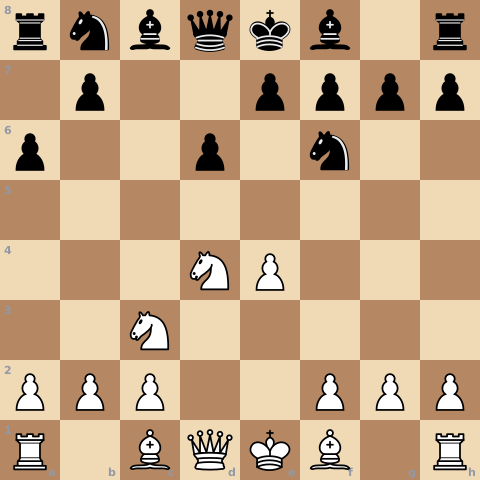
This repertoire covers all five of White's major responding systems, the English Attack, 6.Bg5, 6.Be2, 6.Bc4, and 6.f3, reflecting how much real, varied theory exists at the top level of this specific defense.
Practice the Sicilian Najdorf interactively →
Caro-Kann Advance
Recommended range: 800–2200 Elo · Real games behind this repertoire: 61,922 · Style: Solid, positional
Against White's most common response to the Caro-Kann, the Advance Variation, Black's main plan is well-established in real games.
1. e4 c6 2. d4 d5 3. e5
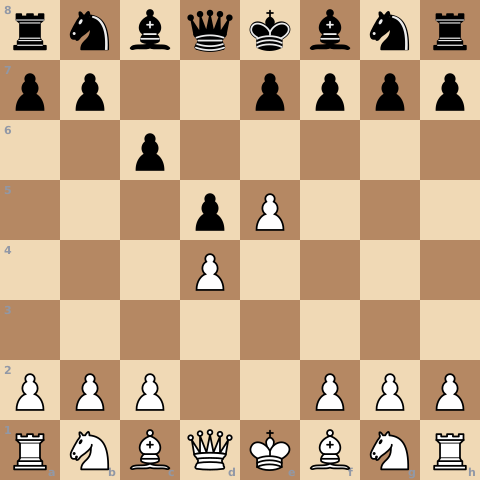
From here, the split in real games:
- 3...c5 (pushing the c-pawn to challenge White's center), striking directly at the center, 23% of real games.
- 3...Bf5 (developing the bishop before the pawn on e6 could trap it), the classical main line, developing the bishop before it can be shut in.
This is one of the widest recommended ranges of the seven, 800 to 2200, reflecting how the same solid structure genuinely holds up from a near-beginner level through advanced play.
Practice the Caro-Kann as Black interactively →
Petroff Defense
Recommended range: 800–2400 Elo · Real games behind this repertoire: 50,005 · Style: Solid, positional
The Petroff is a symmetrical, counter-attacking reply, meeting White's central pawn with an equally direct central pawn of its own, then meeting the knight attack with a knight of its own rather than defending passively.
1. e4 e5 2. Nf3 Nf6
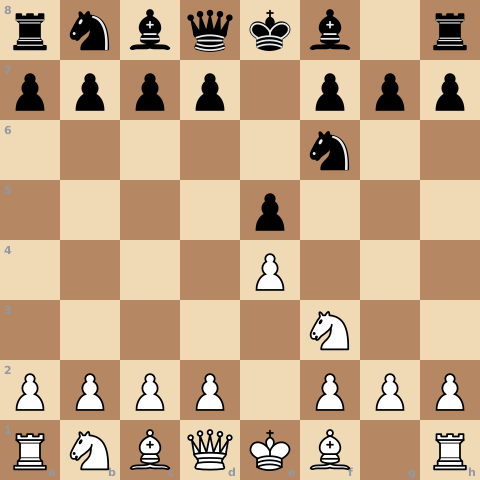
This specific reply, 2...Nf6 (developing the knight to counter-attack White's pawn on e4 instead of defending the e5 pawn), is played in 53% of real games reaching this position, the clear main choice over defending the e5-pawn directly. This repertoire covers all three of White's genuine third-move tries.
Practice the Petroff Defense interactively →
Modern Defense
Recommended range: 900–1800 Elo · Real games behind this repertoire: 84,900 · Style: Flexible
The Modern Defense fianchettoes the bishop immediately, without committing to a specific pawn structure first, keeping real flexibility for several moves.
1. e4 g6 2. d4
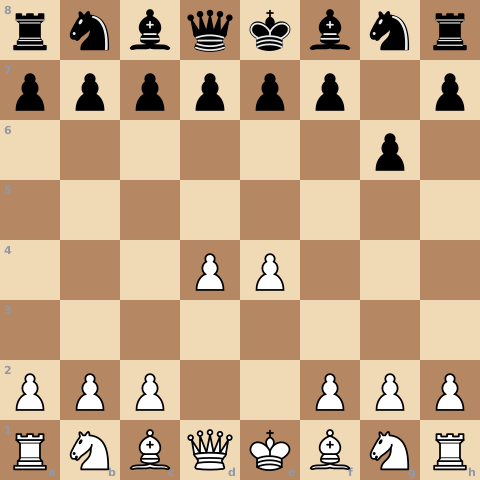
This central response from White is played in 91.2% of real games, close to forced. Following the natural continuation:
2...Bg7 3. Nc3 d6
Black fianchettoes the bishop, then White develops the knight, then Black pushes the d-pawn one square. That specific move order, 3...d6, is the main choice at 59.8% of real games reaching this position, ahead of Nc3 itself at 72.6% one move earlier.
Practice the Modern Defense interactively →
Pirc Defense
Recommended range: 750–1800 Elo · Real games behind this repertoire: 32,086 · Style: Flexible
Closely related to the Modern Defense, the Pirc commits to the knight development first, letting White build a large pawn center before attacking it with pieces.
1. e4 d6 2. d4 Nf6 3. Nc3
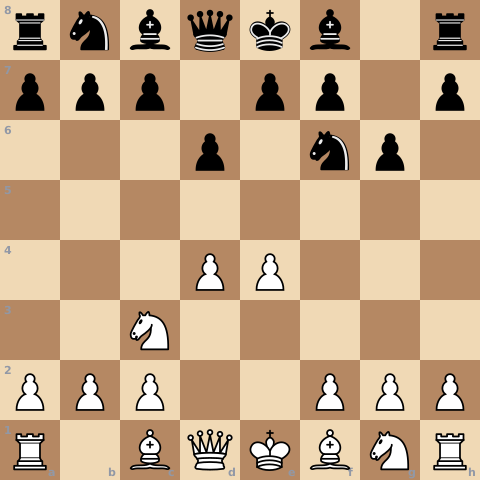
That developing move is played in 91.0% of real games reaching this position. Black's natural follow-up:
3...g6
Preparing to fianchetto the dark-squared bishop. Reaches this exact structure in 97.7% of real games, about as close to forced as this data gets, and this repertoire covers four full White systems from there: the Austrian Attack, the Classical System, the 150 Attack, and the active Bg5 Variation.
Practice the Pirc Defense interactively →
Alekhine's Defense
Recommended range: 1200–2000 Elo · Real games behind this repertoire: 41,715 · Style: Flexible
A provocative reply that invites White's pawns forward before attacking them with pieces, rather than contesting the center directly on move one.
1. e4 Nf6
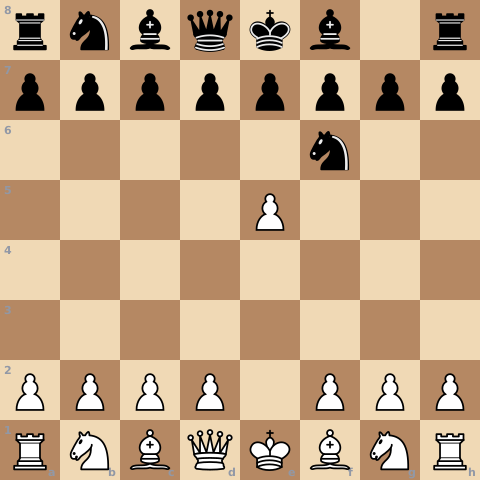
White's two real responses split clearly:
- 2. e5 (pushing the pawn to chase the knight), chasing the knight immediately, the main choice at 82.2% of real games.
- 2. Nc3 (developing the knight instead), a calmer developing alternative, 17.8%.
Following the main line, 2...Nd5 3. d4 (the knight retreats to d5, then White claims the center with the d-pawn) is played in 70.4% of real games reaching that position, five real White systems are covered from there: the Modern Variation, the Exchange Variation, the Four Pawns Attack, the Chase Variation, and the Two Knights Variation.
Practice Alekhine's Defense interactively →
Scandinavian Defense
Recommended range: 400–1400 Elo · Real games behind this repertoire: 23,993 · Style: Solid, aggressive
One of the oldest openings in chess, and the most accessible of these seven, with the lowest recommended starting point by a wide margin.
1. e4 d5 2. exd5 Qxd5
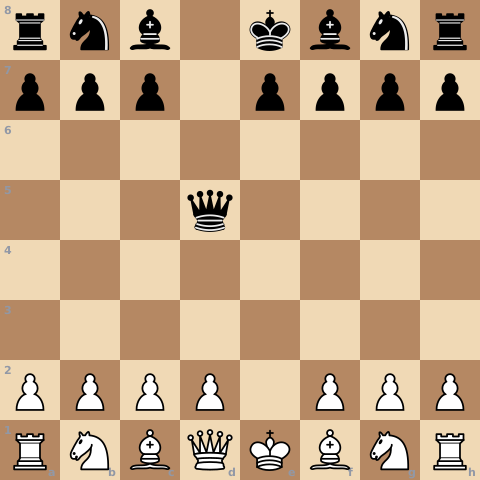
Striking the center immediately (White's pawn captures Black's on d5, then Black's queen recaptures) and recapturing with the queen leads to the well-tested 3...Qa5 main line. A specific move-frequency percentage wasn't available in this repertoire's published content, so none is cited here, its inclusion in this list rests on its real, verified game count and its genuinely low, accessible Elo range instead.
Practice the Scandinavian Defense interactively →
Try All Seven for Free
Every defense above, and the full 36-opening library, is completely unlocked during this site's open beta. No card, no limit, no account required to start, just real, move-by-move practice lines built from the same data cited in this article, with your progress tracked for free if you create an account.
Every line checked the same way, against real game data, not against what sounds right.
Browse all 36 openings free →