The Scandinavian Defense: A Beginner's Guide
The Scandinavian Defense begins 1.e4 d5, and it's one of the oldest defenses in chess still played at every level today. Black strikes directly at White's center on the very first move, rather than waiting to challenge it later. This guide covers a complete Black repertoire built around the deeply-tested 3...Qa5 main line, drawn from 23,993 real games, answering all three of White's genuinely common systems with one coherent, engine-verified plan.
Quick facts
| Moves | 1.e4 d5 2.exd5 Qxd5 3.Nc3 Qa5 |
| Played as | Black |
| Best for | Roughly 400–1400 rated players, including complete beginners |
| Style | Solid overall, with a genuinely sharp option available for White to consider too |
| Games analyzed | 23,993 real master games, every leaf line backed by 60+ real examples |
| Lines covered here | 26 |
What is the Scandinavian Defense?
Most defenses to 1.e4 develop naturally for a few moves before challenging White's center directly. The Scandinavian skips that entirely: 1...d5 strikes at the center immediately, on the very first move, before either side has developed a single piece. White almost always accepts with 2.exd5, "by far the most common and principled response," and Black recaptures with 2...Qxd5, bringing the queen out early and directly.
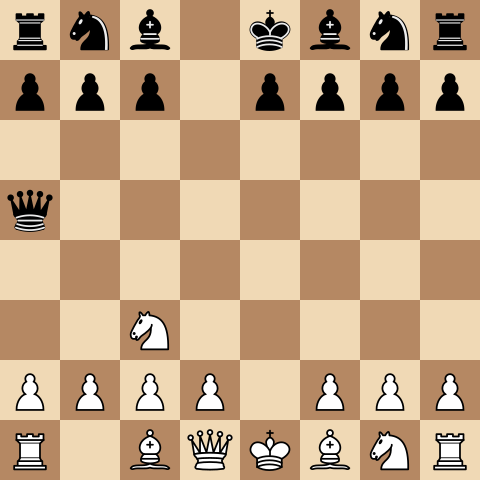
This early queen development looks risky at first glance, and White immediately tries to exploit it with 3.Nc3, developing with tempo and attacking the queen that just recaptured, verified as a genuine attack, not just an inconvenient placement, since a knight on c3 reaches d5 directly regardless of anything else on the board. The repertoire here follows the classical, most-tested answer: 3...Qa5, retreating to a square where the queen stays safe, active, and ready to support Black's development, a line so thoroughly analyzed it has its own name, the Mieses-Kotrč Variation. From here, the resulting structure plays remarkably like the Caro-Kann Defense for Black, just reached by a completely different, far more direct move order. The queen has already done its job of recapturing centrally, and the rest of the game unfolds along familiar, well-understood lines.
How to play the Scandinavian Defense: move by move
Every line below starts 1.e4 d5 2.exd5 Qxd5 3.Nc3 Qa5, reaching the main line before Black's next move. From here, Black continues with the natural 4...Nf6, developing "hitting nothing in particular but preparing quick, solid development." White has three genuinely common systems in the data, each fully covered with its own real, tested continuations.
White's main system: 4.d4
"By far the most popular and principled reply", White grabs the center with both hands. Black responds with 4...Nf6, and White chooses between three real continuations: 5.Nf3 (the most common, simply developing naturally), 5.Bc4 (developing the bishop actively before committing the knight), or 5.Bd2 (developing the dark-squared bishop first, getting ahead of a future ...Bb4 pin against the knight on c3 and castling quickly without having to deal with it later).
Following the main continuation, 5.Nf3, Black plays 5...Bf5, "the bishop develops outside the pawn chain, before it can get boxed in by a future ...e6", the exact same structural principle that governs the Caro-Kann and French Advance repertoires on this site, just arriving here by a very different route and reinforcing how often this one idea recurs across seemingly unrelated openings. White has four genuinely distinct real tries against this bishop:
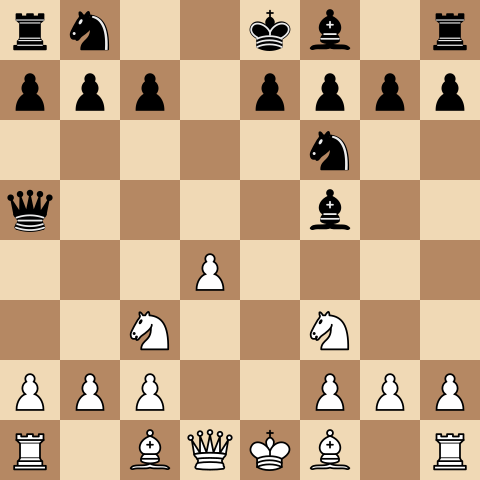
- 6.Bc4, developing to the most active square, aiming at f7 the same way it does in several other classical White repertoires on this site, reusing a familiar idea in a new context.
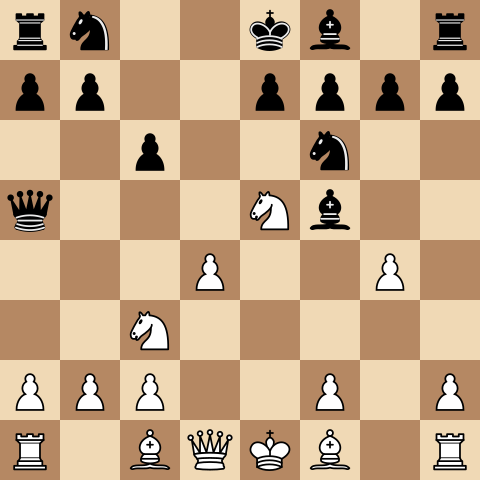
- 6.Ne5, centralizing the knight aggressively and preparing a kingside pawn storm. After 6...c6, shoring up the center before it comes under more pressure, White can continue with the calmer 7.Bc4, keeping the knight centralized while developing normally, or the immediate, sharp 7.g4, launching the pawn storm right away without waiting for ...e6 first, a real, named try known as the Gruenfeld Variation.
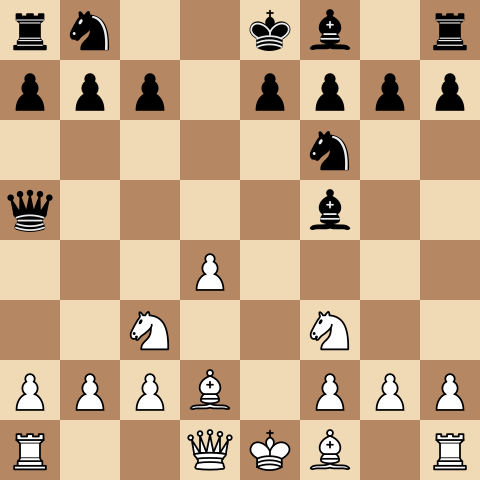
- 6.Bd2, developing solidly, "currently one of the most respected tries against the whole 3...Qa5 system," reflecting a shift in how seriously this quieter approach is taken compared to older assessments of the opening. This move carries a concrete point worth knowing precisely: the bishop lands directly on the a5-e1 diagonal, currently blocked by White's own knight on c3. If that knight jumps away, to Nd5 or Ne4, it opens a genuine discovered attack straight down that diagonal onto Black's queen. Black's answer is 6...c6, which does two things at once: it takes the d5 square away from White's knight specifically (a knight landing there could simply be captured with ...cxd5), and it opens a safe retreat path for the queen to c7 or d8 if the diagonal ever does open up.
- 6.Bd3, offering a trade of light-squared bishops outright, simplifying the position rather than fighting for an edge with pieces still on the board.
White's alternative systems: 4.Nf3 and 4.Bc4
Rather than grabbing the center immediately, White can develop the knight first with 4.Nf3, "keeping options flexible about the center," or bring the bishop out actively with 4.Bc4, eyeing f7 immediately. Both transpose into structures with real, distinct theory of their own, and both are fully covered in this repertoire alongside the main 4.d4 system. This flexibility on White's part is worth taking seriously rather than treating as a minor sideline, since all three systems appear with genuine frequency in the real-game data behind this repertoire, being prepared for only the most common one would leave real gaps against a meaningful share of real opponents.
Strategic ideas in the Scandinavian Defense
A handful of ideas repeat across this whole repertoire:
- 1...d5 is a direct strike, not a slow developing move. The Scandinavian's entire identity comes from challenging the center immediately rather than preparing to challenge it later, this is what separates it from most other replies to 1.e4, and it means the opening's core character is settled after Black's very first move.
- The queen's early trip to a5 is deliberate and well-tested, not an accident. Retreating there keeps the queen safe from further tempo-gaining attacks while staying active, and it's specifically what makes this exact structure ("the Mieses-Kotrč Variation") one of the most deeply analyzed branches of the whole defense, with real, verified answers to nearly everything White might try afterward.
- ...c6 is the backbone of Black's response to White's more central tries, not just a quiet developing move. Against 6.Ne5 and especially 6.Bd2, it does two jobs for the queen on a5 at once: it takes away the d5 square from White's knights (blunting ideas like Nd5, which would otherwise hang to a simple pawn capture), and it guarantees the queen a safe retreat to c7 or d8 if a diagonal ever opens up against it. Recognizing ...c6 as load-bearing in those specific lines, not decorative, is part of understanding why this structure holds up so well.
- Getting the bishop out to f5 before ...e6 is the same principle as the Caro-Kann and French Advance. Once ...e6 is played, that bishop has no good diagonal left, developing it first, while the pawn chain is still open, avoids that problem entirely, and it's worth recognizing as the same recurring idea rather than a fresh concept unique to this one opening.
- Ne5 followed by g4 is a genuine, sharp try worth knowing on sight. It's not a bluff. White is willing to commit to a real kingside pawn storm rather than just centralizing the knight quietly, and treating it as a minor inconvenience rather than a real plan can lead to being caught off guard.
- Black's core development plan barely changes across White's three main systems. Whether White plays d4, Nf3, or Bc4 first, the same underlying idea (develop the knight, then the bishop to f5, then complete development naturally) carries through, which matters more in practice than the raw number of lines might suggest.
Who should play the Scandinavian Defense?
The Scandinavian Defense is a strong fit for players roughly 400 to 1400 rated, with a style best described as solid. If you want a direct, low-theory way to meet 1.e4 that doesn't require memorizing deep, forcing tactical lines, the Scandinavian offers a genuinely sound structure reached by one of the most straightforward move orders in all of chess.
It's also a strong match if you already play the Caro-Kann as Black. The resulting middlegame structures share real similarities (a solid center, a light-squared bishop developed before it can get boxed in), even though the two openings arrive there by very different early moves. Players who've internalized that one core idea (get the bishop out before the pawn chain closes) often find it transfers directly, cutting down on how much genuinely new material there is to learn, since the same recognition applies regardless of which opening actually put them in that position.
It's a weaker fit if you're uncomfortable bringing your queen out early, even when it's a well-tested, theoretically sound decision. Some players simply prefer defenses where no piece takes center stage quite this soon, even if the actual risk here is well understood and manageable. The early queen development is a real, permanent feature of this opening's identity, not something that goes away with better preparation.
If the structures here appeal to you, the Caro-Kann Advance reaches similar positions by a different route and gives Black a bit more to work with as you improve. It's a natural next opening once the Scandinavian starts feeling limiting.
Common mistakes in the Scandinavian Defense
- Retreating the queen somewhere other than a5 without a specific reason. The a5 square is the deeply-tested main line for good reason. It keeps the queen safe and active at the same time, and deviating from it means leaving well-analyzed, reliable theory behind for a position that hasn't been studied nearly as thoroughly.
- Playing ...e6 before developing the bishop to f5. This is the same structural mistake that recurs across several openings on this site. It locks the bishop behind its own pawn chain for the rest of the game, giving up real, lasting piece activity for nothing in return.
- Underestimating Ne5 followed by g4. This is a genuine, sharp plan, not just an aggressive-looking bluff. Treat it as a real continuation worth preparing for, not something to dismiss as unlikely to actually happen at the ratings this repertoire is built for.
- Treating all three of White's main systems (d4, Nf3, Bc4) as requiring completely separate preparation. Black's core development plan (Nf6, then Bf5, then natural completion of development) carries across all three, which makes this far more learnable than it might look at first glance from the total line count alone, since most of that count comes from White's choices, not Black's.
Frequently asked questions
Is the Scandinavian Defense good for beginners?
Yes, it's rated well for roughly 400 to 1400, and its appeal is a direct, low-theory structure that doesn't require memorizing sharp forcing lines. The early queen development looks riskier than it actually is once the well-tested 3...Qa5 retreat is understood, and the resulting positions are genuinely straightforward to play once that one idea clicks.
Why does Black recapture with the queen instead of a piece in the Scandinavian?
Because White's very first capture (2.exd5) removes the only pawn that could otherwise recapture, and developing a piece to recapture instead (like 2...Nf6, a real alternative approach) delays regaining the pawn. The queen recapture is the classical, most direct approach, and 3...Qa5 specifically addresses the one real drawback (the queen being exposed to further attacks) rather than just accepting the risk and hoping for the best.
What is the Mieses-Kotrč Variation?
It's the name given to the specific 3...Qa5 line covered in this repertoire, one of the most deeply analyzed and tested branches of the entire Scandinavian Defense, reached after 1.e4 d5 2.exd5 Qxd5 3.Nc3 Qa5, and its own dedicated name is a real sign of just how thoroughly this exact position has been studied over the years.
Is the Scandinavian Defense similar to the Caro-Kann?
The resulting middlegame structures share real similarities, particularly the light-squared bishop developing to f5 before ...e6 closes off its diagonal, but the two openings reach that point through very different early move orders, with the Scandinavian striking the center immediately rather than preparing the strike first.
Is bringing the queen out on move two actually risky in the Scandinavian?
Less than it looks. The one real drawback, White gaining a tempo by attacking the queen with Nc3, is specifically addressed by retreating to a5, a well-tested square that stays safe from further attacks while remaining actively placed. The position that results is genuinely sound, not just "playable despite the risk."
Do all three of White's systems against the Scandinavian require separate preparation?
Not really. Black's development plan (Nf6, then Bf5, then completing development naturally) carries across 4.d4, 4.Nf3, and 4.Bc4 with only minor adjustments, which is exactly why this repertoire treats them as one coherent plan rather than three unrelated ones. The raw line count looks larger than the amount of genuinely distinct material actually is.
Related openings
- Caro-Kann Advance — The same long-term philosophy -- support the center with a pawn, free the light-squared bishop before it's boxed in -- reached through a different move order against 1.e4.
- Slav Defense — The same core idea applied against 1.d4 instead of 1.e4, for a complete Black repertoire built on one consistent long-term philosophy.
Practice every real line against master-game replies, with a plain-English explanation on every move.
Practice Scandinavian Defense free →