The Pirc Defense: A Complete Guide
The Pirc Defense begins 1.e4 d6. It's one of the most flexible, most genuinely hypermodern ways for Black to meet 1.e4. Rather than contesting the center immediately, Black fianchettoes the kingside bishop and invites White to build a big pawn center, planning to strike back at it later with a well-timed pawn break. This guide covers a complete Black repertoire, built from 32,086 real, individually validated games across four relevant datasets, answering all of White's genuinely major systems.
Quick facts
| Moves | 1.e4 d6 2.d4 Nf6 3.Nc3 g6 |
| Played as | Black |
| Best for | Roughly 900–1800 rated players |
| Style | Flexible |
| Games analyzed | 32,086 real, individually validated games across four relevant datasets |
| Lines covered here | 18 |
What is the Pirc Defense?
Most defenses to 1.e4 fight for central control from the very first move. The Pirc does something different: 1...d6 and a kingside fianchetto deliberately let White build a big center with pawns on d4 and e4, trusting that this center becomes a real target once Black finishes developing. From there, Black strikes back with ...c5, ...e5, or ...f6, depending on exactly which system White has chosen.
This hypermodern approach, provoke a big center, then attack it, gives the Pirc real flexibility. Black's core setup barely changes across White's different systems, even though the resulting middlegames can look quite different from each other.
How to play the Pirc Defense: move by move
Every line below starts 1.e4 d6 2.d4 Nf6 3.Nc3 g6. From here, White has several genuinely major systems in the real-game data, and this repertoire answers each with real, tested continuations.
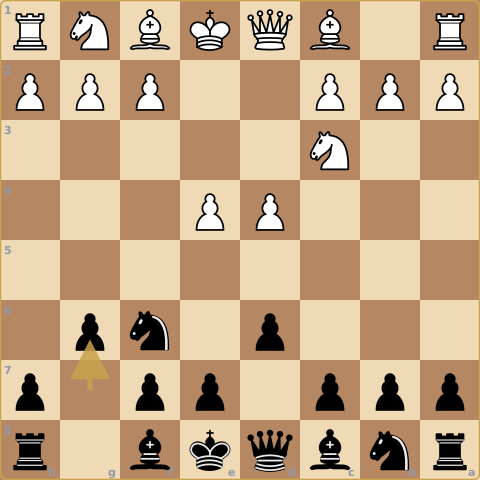
The Austrian Attack: 4.f4
The most ambitious try, White grabs even more central space and prepares a full-scale pawn storm rather than settling for a normal buildup. Black continues with 4...Bg7, completing the fianchetto and keeping development on track before deciding on the right moment to strike back at White's ambitious center.
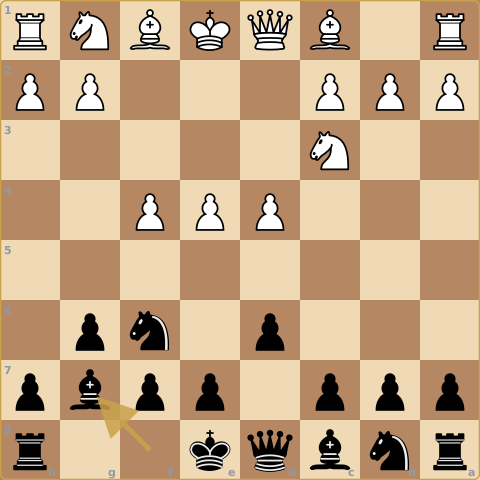
White's pawns on e4, d4, and f4 form a genuinely massive three-pawn center, but that mass is also a target. Black's thematic answer is to castle and strike with 6...c5!, hitting d4 directly and forcing White to resolve the central tension on Black's terms rather than getting to simply consolidate it. 6...Na6 is the flexible alternative, preparing the same ...c5 break a move later while keeping options open in the meantime.
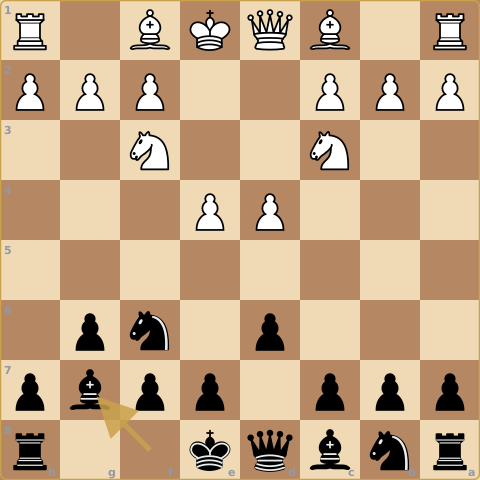
The Classical System: 4.Nf3
A quieter, more natural developing approach, White brings the knight out and prepares to castle without committing to an immediate pawn storm. Black responds the same way: 4...Bg7, completing the fianchetto and following the same reliable development plan that works across most of White's systems.
The 150 Attack: 4.Be3
A more direct, aggressive setup: White develops the bishop actively and builds toward a full battery-and-storm plan aimed straight at Black's king. The typical continuation is Qd2, f3 (shoring up e4 and preparing a further pawn advance), Bh6 (offering to trade off Black's fianchettoed bishop, the piece Black's king relies on most), and then an h4-h5 pawn storm to rip the kingside open. It's called the "150 Attack" for a genuinely documented reason: British club players graded around 150 on the old BCF scale, roughly 1800 Elo, found the plan easy enough to pick up that they could use it to blitz through much stronger opposition with a straightforward setup and no need for deep preparation.
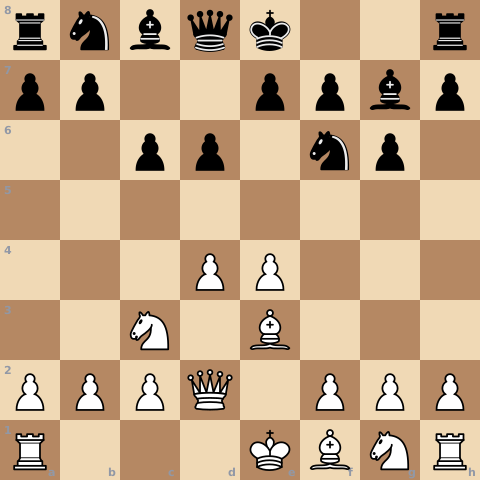
Black's answer is genuinely dynamic, not just passive defense. Black completes the fianchetto with 4...Bg7 as always, and after 5.Qd2, 5...c6 prepares queenside expansion of Black's own: ...b5 gains space and opens lines on the other wing, and ...Qa5 puts real pressure on White's position while both sides race to get their respective attacks in first. Whoever's storm arrives faster tends to decide the game.
The Bg5 Variation: 4.Bg5
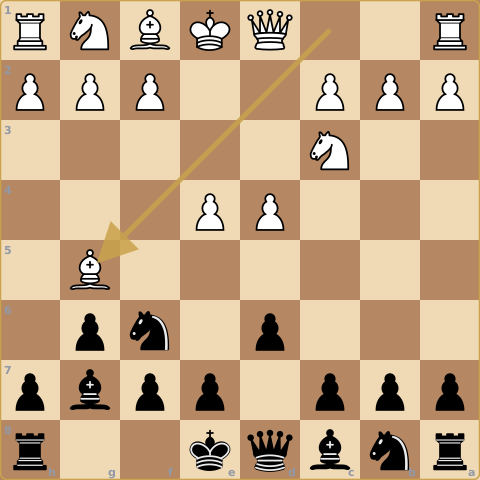
White develops the bishop actively, attacking the newly-developed knight on f6 before Black gets a chance to complete the fianchetto. Black continues with the normal plan regardless: 4...Bg7, completing development since the pressure on the knight isn't dangerous yet and doesn't need an immediate reaction.
Strategic ideas in the Pirc Defense
A handful of ideas repeat across all of White's systems:
- Letting White's center grow is deliberate, not passive. The whole point of the fianchetto-first approach is that a big center becomes a real target later, this is a genuine strategic choice, not falling behind in development.
- ...c5, ...e5, and ...f6 are Black's characteristic central breaks. Which one applies depends on the specific system White chooses, recognizing which is called for matters more than having one fixed reaction to all of them.
- Not every attack on a piece is a pin worth reacting to immediately. In the Bg5 Variation specifically, the bishop attacks the knight on f6, but nothing is actually pinned there. Black's development plan continues normally rather than treating the pressure as more urgent than it is.
- The Austrian Attack and 150 Attack are both genuinely aggressive, but in different ways. One builds a bigger central pawn mass that Black meets with the thematic ...c5 break; the other develops pieces toward a full Qd2-f3-Bh6-h4-h5 kingside storm, met with Black's own queenside counterplay via ...b5 and ...Qa5. Recognizing which plan White has chosen matters for how Black should respond.
- Black's core setup barely changes across systems as different as the Austrian Attack and the Classical System. Fianchetto, then strike back at the right moment, this same underlying structure carries through most of White's approaches.
Who should play the Pirc Defense?
The Pirc Defense is a strong fit for players roughly 900 to 1800 rated, with a style best described as flexible. If you want a genuinely adaptable way to meet 1.e4, one where the same core development plan works across most of White's replies, the Pirc offers real, well-tested flexibility without demanding a completely different repertoire for every system White might choose.
It's also a strong match if you're comfortable with a hypermodern approach to the center, deliberately allowing White extra space early, trusting that it can be challenged effectively once development is complete, rather than fighting for central control from the very first moves.
It's a weaker fit if you specifically want to contest the center immediately, the way more classical defenses to 1.e4 do, the Pirc's whole identity depends on being comfortable letting White build first and striking back later.
Common mistakes in the Pirc Defense
- Contesting the center too early instead of completing the fianchetto first. The whole point of this opening is finishing development before striking back, abandoning that sequence gives up the structural idea the whole repertoire is built around.
- Overreacting to pressure that isn't actually urgent. In the Bg5 Variation, the attack on the f6 knight is real but not a pin and not dangerous yet, treating it as an emergency rather than continuing the normal development plan wastes real tempo.
- Treating all of White's systems as requiring the same response. The Austrian Attack, Classical System, 150 Attack, and Bg5 Variation are genuinely different setups, knowing which one is actually on the board matters more than having one fixed reaction ready for all of them.
- Delaying the central break for too long once development is complete. Depending on the system, ...c5, ...e5, or ...f6 is meant to arrive once the fianchetto is done, waiting too long lets White's center become an asset rather than the target it's meant to be.
Frequently asked questions
Is the Pirc Defense good for beginners?
It's a strong fit for players roughly 900 to 1800. Its appeal is a genuinely flexible, principled plan (fianchetto, let the center grow, strike back) rather than sharp forced tactics, and the same core setup carries across most of White's systems.
Why does Black let White build such a big center in the Pirc Defense?
Because that center becomes a real target once Black finishes developing. This is a deliberate, well-tested hypermodern strategy, not a sign of falling behind. The fianchettoed bishop and the coming central pawn breaks are specifically built to attack the structure White spends the opening constructing.
What is the Austrian Attack in the Pirc Defense?
It's White's most ambitious system, 4.f4, grabbing extra central space and preparing a full-scale pawn storm rather than a normal, quieter buildup. This repertoire meets it with the same reliable development plan used against most of White's other systems, then strikes back at the resulting three-pawn center with the thematic 6...c5! break, or 6...Na6 preparing the same idea a move later.
What is the difference between the Pirc Defense and the Modern Defense?
It comes down to move order. The Pirc commits to ...Nf6 immediately, on move 1 or 2, before deciding on the exact central plan. The Modern Defense delays that knight move: Black plays 1...g6 first and often waits several more moves before bringing the knight to f6, keeping the option of a different central setup, like an early ...c5 or ...e5, open for longer. The two openings share a lot of the same underlying ideas and can transpose into each other, but the Modern's flexibility comes specifically from not committing to ...Nf6 right away.
What is the 150 Attack?
It's White's 4.Be3 system, developing the bishop actively and building toward a Qd2-f3-Bh6-h4-h5 battery and pawn storm aimed at Black's king. The name comes from the old British BCF grading scale: it was considered simple enough that even a club player rated around 150 (roughly 1800 Elo) could use it to overwhelm much stronger opponents. This repertoire meets it with the usual 4...Bg7 followed by 5...c6, preparing ...b5 and ...Qa5 for genuine queenside counterplay of its own rather than just defending passively.
Practice every real line against master-game replies, with a plain-English explanation on every move.
Practice Pirc Defense free →