The Trompowsky Attack: A Complete Guide
The Trompowsky Attack arises after 1.d4 Nf6 2.Bg5. It's one of the most efficient ways for White to sidestep the heaviest 1.d4 theory. The bishop develops actively outside the pawn chain immediately, before Black can steer the game into a King's Indian, Grünfeld, or Nimzo-Indian structure. This guide covers a complete White repertoire, built from 46,129 real, individually validated games across three combined datasets, answering all of Black's genuinely major replies.
Quick facts
| Moves | 1.d4 Nf6 2.Bg5 |
| Played as | White |
| Best for | Roughly 900–1800 rated players |
| Style | Aggressive |
| Games analyzed | 46,129 real, individually validated games across three combined datasets |
| Lines covered here | 21 |
What is the Trompowsky Attack?
After 1.d4 Nf6, most White repertoires continue with 2.c4 or 2.Nf3, entering enormous bodies of well-mapped theory. The Trompowsky does something more direct: 2.Bg5 develops the bishop actively right away, threatening to trade it for Black's knight and inflict doubled pawns, while sidestepping the deepest lines of the King's Indian, Grünfeld, Nimzo-Indian, and Queen's Indian entirely.
This isn't just a surprise weapon for lower-rated games. The opening is named after Octávio Trompowsky, the Brazilian champion who popularized it through the 1930s and 1940s, and it has real, modern elite pedigree. Magnus Carlsen opened with it in Game 1 of his 2016 World Championship match against Sergey Karjakin in New York, catching his opponent off guard right from the very first moves.
How to play the Trompowsky Attack: move by move
Every line below starts 1.d4 Nf6 2.Bg5. From here, Black has four genuinely major replies in the real-game data, and this repertoire answers each with real, tested continuations.
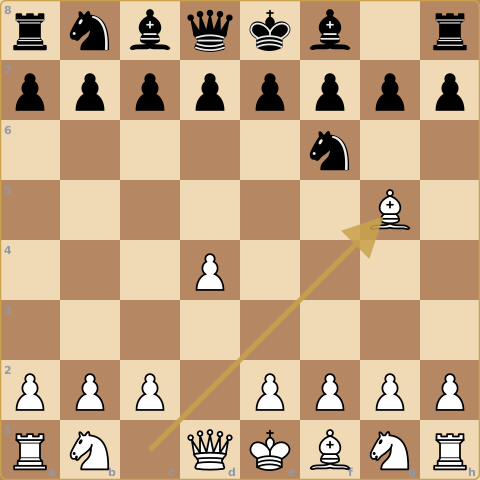
The critical main line: 2...Ne4
Black's most direct response, immediately challenging the bishop and asking a direct question: the knight on e4 attacks the bishop on g5. White retreats with 3.Bf4, an active, flexible square rather than simply avoiding the threat passively, keeping the bishop useful while the position continues to develop.
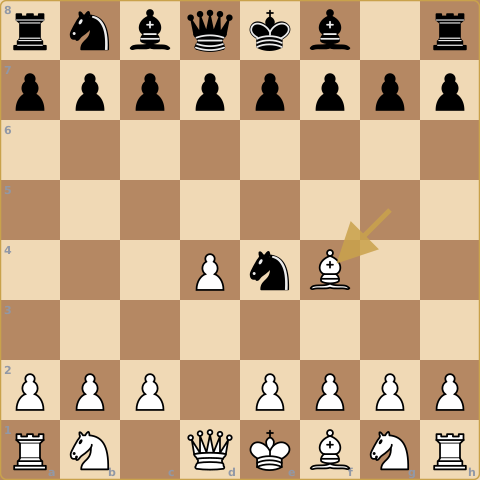
White's follow-up plan here is universal, no matter what Black tries next. The key move is 4.f3!, kicking the knight back and preparing to build a genuinely dominant pawn center with e4. Against 3...c5, for example, White continues 4.f3 Nf6 5.d5, gaining real space and cramping Black's position before development is even finished. That same f3-and-e4 plan is the guiding idea against nearly all of Black's tries here.
The flexible reply: 2...e6
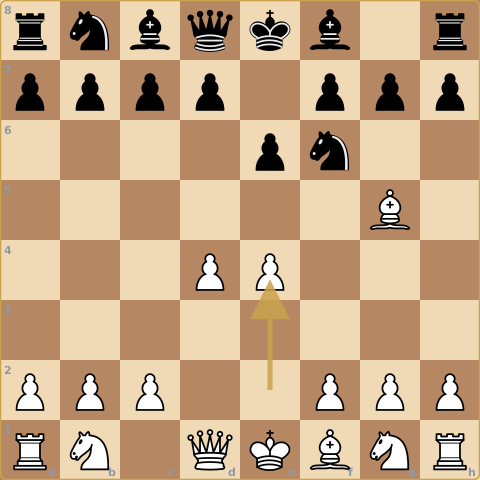
Rather than confronting the bishop directly, Black keeps the position flexible. The point of 2...e6 specifically is to meet a future Bxf6 with ...Qxf6 instead of a pawn: opening the e7 square clears the queen's path to f6, so if White ever trades on f6, Black recaptures with the queen and keeps a clean pawn structure rather than accepting doubled kingside pawns. White responds with 3.e4, grabbing the center while the bishop is already developed, a real, principled way to make use of the tempo White has already gained.
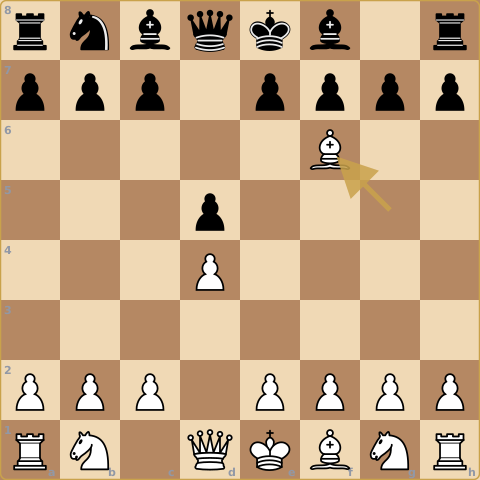
Other major tries: 2...d5 and 2...c5
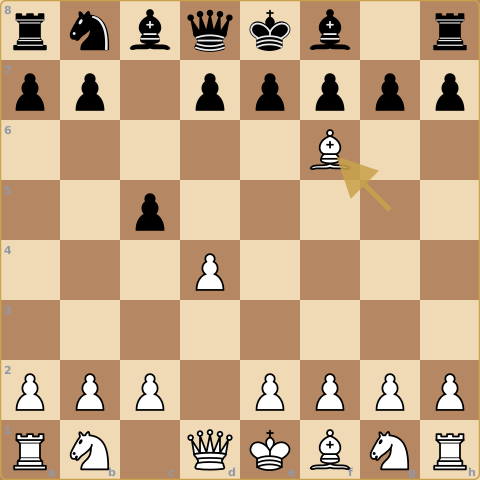
Both of these real, common replies get met the same way: 3.Bxf6, "trading the bishop for the knight right away" rather than retreating or maintaining the tension. This is a genuine, deliberate structural decision, inflicting doubled pawns on Black's kingside in exchange for giving up the bishop pair, a trade-off this repertoire makes consistently rather than reactively.
Strategic ideas in the Trompowsky Attack
A handful of ideas repeat across this entire repertoire:
- 2.Bg5 is about avoiding theory, not avoiding a fight. The whole point is reaching original positions where preparation matters less than understanding, not a passive, low-ambition try.
- 2...Ne4 is a real challenge to the bishop, not just an aggressive-looking move. The knight genuinely attacks the bishop on g5 from e4, which is exactly why White's retreat to f4 matters, and why the follow-up 4.f3, kicking the knight and preparing e4, is the universal response.
- Trading on f6 is a deliberate structural decision, not a fallback. Inflicting doubled pawns in exchange for the bishop pair is a real, well-tested trade-off this repertoire makes consistently against several of Black's replies.
- This opening has genuine modern elite pedigree, not just historical novelty value. Carlsen's use of it in an actual World Championship game is a meaningfully different endorsement than an opening merely being "considered playable" at lower levels.
- Black's specific second move genuinely changes White's plan. Ne4, e6, d5, and c5 each get a different, real response, recognizing which one is on the board matters more than having one fixed reaction to all of Black's tries.
Who should play the Trompowsky Attack?
The Trompowsky Attack is a strong fit for players roughly 900 to 1800 rated, with a style best described as aggressive. If you want a direct, low-theory way to meet 1...Nf6 that sidesteps the heaviest Indian-system theory entirely, the Trompowsky offers a genuinely sound, well-tested plan without demanding deep memorization of any single main line.
It's also a strong match if you're drawn to openings with real elite relevance beyond just being a practical surprise weapon, Carlsen's own use of it at World Championship level is real, documented proof that "low theory" and "seriously played at the top" aren't opposites here.
It's a weaker fit if you specifically want to steer the game into one of the deep, heavily-analyzed Indian defenses as White, the Trompowsky's whole appeal is avoiding exactly that kind of theoretical battle in favor of original, less-charted positions.
The appeal here is avoiding the enormous theory that follows 2.c4, and it isn't the only opening that does that. The London System skips the same body of theory far more quietly, playing a near-identical setup whatever Black does rather than posing an immediate question. Same goal, opposite temperament.
Common mistakes in the Trompowsky Attack
- Retreating the bishop passively against 2...Ne4 instead of using it actively. 3.Bf4 keeps the bishop useful and flexible, treating the knight's challenge as something to simply avoid, rather than an opportunity to reposition actively, gives up real value.
- Hesitating to trade on f6 against 2...d5 or 2...c5. This repertoire's answer is a deliberate structural decision, not a last resort, inflicting doubled pawns in exchange for the bishop pair is worth committing to rather than second-guessing.
- Treating all of Black's replies as requiring the same response. Ne4, e6, d5, and c5 are genuinely different tries, knowing which one is actually on the board matters more than having one fixed plan for all of them.
- Assuming low theory means low ambition. The Trompowsky isn't just about avoiding preparation, it's a real, principled way to fight for an edge in original positions, not a passive attempt to simply survive the opening.
Frequently asked questions
Is the Trompowsky Attack good for beginners?
It's a strong fit for players roughly 900 to 1800. Its appeal is a clear, low-theory plan that sidesteps the deepest Indian-system preparation entirely, making it genuinely learnable without heavy memorization, while still offering real chances for an edge.
Why is it called the Trompowsky Attack?
It's named after Octávio Trompowsky, the Brazilian champion who popularized it through the 1930s and 1940s, playing it regularly in tournament chess during that period.
Has the Trompowsky Attack really been played at World Championship level?
Yes, Magnus Carlsen opened with it in Game 1 of his 2016 World Championship match against Sergey Karjakin, a real, documented instance of the opening being used at the very highest level of competitive chess, not just as a lower-level surprise weapon.
How does White meet 2...Ne4, Black's most direct response?
With 3.Bf4, retreating to an active, flexible square rather than passively avoiding the challenge. This keeps the bishop useful while development continues, and the knight on e4 genuinely does attack the bishop on g5 beforehand. The follow-up plan is universal from here: 4.f3 kicks the knight back and prepares a dominant pawn center with e4.
Does the Trompowsky Attack always lead to doubled pawns for Black?
Not always, it depends on Black's second move. Against 2...d5 and 2...c5, this repertoire trades on f6 deliberately, inflicting doubled pawns in exchange for the bishop pair. Against 2...e6, Black has specifically prepared to meet a future Bxf6 with ...Qxf6 instead of a pawn recapture, avoiding those doubled pawns entirely. Against 2...Ne4, the bishop retreats instead of trading, so the question doesn't come up at all.
What's a good alternative to the Trompowsky Attack with a similar philosophy?
The Torre Attack (1.d4 Nf6 2.Nf3 followed by 3.Bg5) shares the same core idea, one early bishop development that keeps things genuinely low-theory rather than committing to deep, separate preparation against every possible reply.
Practice every real line against master-game replies, with a plain-English explanation on every move.
Practice Trompowsky Attack free →