The Torre Attack: A Complete Guide
The Torre Attack arises after 1.d4 Nf6 2.Nf3, followed by its defining move, 3.Bg5. Rather than build a specific structure right away, White develops the dark-squared bishop to an active square before it gets boxed in behind a future e3, then follows up with one consistent plan, Nbd2, e3, Bd3, that works against multiple Black setups. This guide covers a complete repertoire against both of Black's major replies, built from 30,202 real, individually validated games.
Quick facts
| Moves | 1.d4 Nf6 2.Nf3 (either order) 3.Bg5 |
| Played as | White |
| Best for | Players who want one repeatable plan against multiple Black setups |
| Style | Solid, flexible, low-theory |
| Games analyzed | 30,202 real, individually validated games |
| Lines covered here | 19 (across Black's two major replies) |
What is the Torre Attack?
After 1.d4 Nf6 2.Nf3, most systems commit to a specific plan right away. The Torre Attack does something different: 3.Bg5 develops the dark-squared bishop immediately, before a later e3 would seal it in behind the pawn chain. The bishop's pin on the f6 knight is a genuine, recurring asset throughout this whole repertoire, not just a developing move.
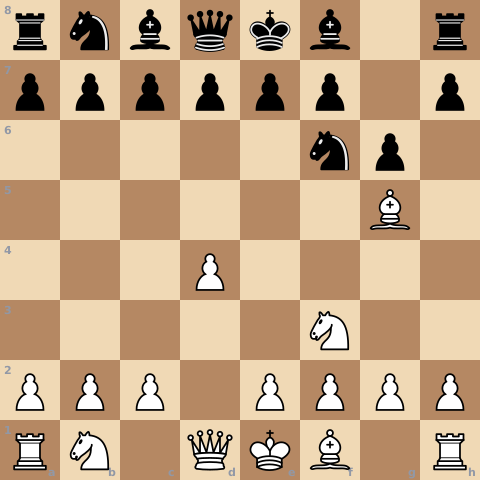
In our validated data, Black's two real replies split almost exactly evenly: 2...g6 (51%), heading toward a King's Indian-style fianchetto, and 2...e6 (49%), keeping the position more flexible. Both are covered in full here.
How to play the Torre Attack: move by move
Against 2...g6: the fianchetto branch
Black prepares to fianchetto, and White continues with the same core plan regardless: 3...Bg7 4.Nbd2, developing the knight before committing to a specific pawn structure. From here, 4...O-O 5.c3 d6 6.e4 c5 is the richest, most tested line in this branch, both sides completing development before White claims a full classical center and Black challenges it directly.
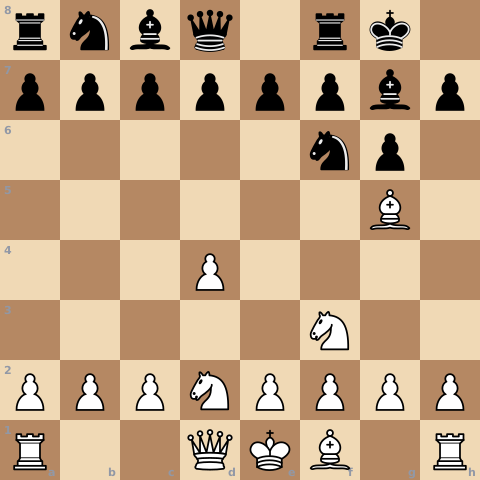
Black also has a real, well-tested alternative on move five: 5...d5 instead of the King's Indian-style d6, staking a claim in the center immediately rather than keeping the structure flexible. Both approaches are covered in full.
Against 2...e6: a genuinely varied branch
Black's replies to 3.Bg5 here are real and varied. In our data: 3...c5 (33%, striking the center immediately), 3...h6 (27%, questioning the bishop directly), 3...d5 (20%), and 3...Be7 (17%). The two most common replies, c5 and h6, are covered here in full depth; the other two are real, legitimate tries worth knowing exist, though this repertoire's deepest lines focus on the two most frequent choices.
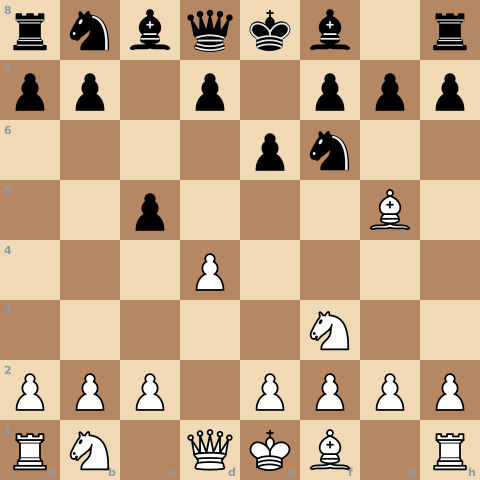
Against 3...c5, White continues 4.e3 Be7 5.Nbd2 b6 6.Bd3 Bb7 7.O-O O-O, a calm, harmonious structure with balanced chances. Against the sharper 3...h6, White keeps the pin alive with 4.Bh4 rather than trading or retreating, and the position continues along similar lines to the c5 branch.
Strategic ideas in the Torre Attack
- Bg5 before e3, always. The entire point of this repertoire is developing the bishop before it gets boxed in. Playing e3 first defeats the purpose of choosing the Torre Attack in the first place.
- The pin on f6 is a real, recurring asset, not just a developing move. It shapes the character of the position throughout the opening, especially in lines where Black hasn't yet addressed it.
- One consistent plan works against multiple Black setups. Nbd2, e3, Bd3, and castling recur across both the g6 and e6 branches, this is a genuine repertoire built on one coherent idea, not two separate openings bundled together.
- Patience before central expansion. Several of the richest lines here specifically reward completing development fully before committing to e4 or a similar central break.
- Know both of Black's major replies, not just one. The 51/49 split between 2...g6 and 2...e6 in our data means a real repertoire needs genuine comfort with both branches.
Who should play the Torre Attack?
The Torre Attack is a strong fit for players who want a genuinely low-theory system as White, one coherent plan that holds up against multiple different Black setups rather than deep, separate preparation for each. It's also a real, historically significant weapon, Carlos Torre himself used it to defeat former World Champion Emanuel Lasker in one of the most celebrated games in chess history.
It's a weaker fit if you're specifically looking for a system that forces a large, immediate advantage. The Torre Attack rewards patient, harmonious development over forcing tactics, real chances come from outplaying your opponent in a well-understood structure.
Common mistakes in the Torre Attack
- Playing e3 before Bg5 has developed. This is the single most important move-order detail in the whole opening, reversing it defeats the entire point of choosing the Torre Attack.
- Playing Black and treating the pin on f6 as merely annoying rather than a real, lasting factor. It shapes the position throughout the opening, not just in the opening moves.
- Playing White and rushing central expansion before completing development. Several of the richest lines here specifically reward patience before committing to e4.
- Assuming low-theory means low-effort. The Torre Attack genuinely reduces the memorization burden, but it still rewards understanding the structures behind both of Black's major replies.
Frequently asked questions
Is the Torre Attack good for beginners?
Its low-theory, one-plan-fits-multiple-replies structure makes it a genuinely accessible system. You're learning one coherent set of ideas rather than separate deep theory for every possible Black setup.
What's the most famous Torre Attack game?
Carlos Torre's own win over former World Champion Emanuel Lasker at Moscow 1925, featuring a legendary queen sacrifice and windmill combination still studied and replayed a century later.
How should Black meet the Torre Attack?
Both of Black's major replies in our data, the King's Indian-style 2...g6 fianchetto and the more flexible 2...e6, hold up well with calm, natural development. The early 3...h6, directly questioning the bishop, is also a well-tested, sound approach.
Is the Torre Attack still played today?
Yes. Our dataset spans a very wide time range, and recent activity confirms this remains a genuinely practical choice, not just a historical curiosity from the 1920s.
Where does the name "Torre Attack" come from?
It's named for Carlos Torre Repetto, Mexico's first chess grandmaster, who introduced the system at the historic Moscow 1925 tournament, the first state-sponsored chess event in history, with the world's top players in attendance.
Related openings
- Trompowsky Attack — Another low-theory system built around an early bishop development against 1...Nf6, a natural sibling if you like the Torre's overall philosophy.
- London System — A different repeatable, low-theory setup for White, building a solid structure with Bf4 instead of the Torre's Bg5, worth comparing directly.
Practice every real line against master-game replies, with a plain-English explanation on every move.
Practice Torre Attack free →