The Sicilian Najdorf: A Complete Guide
The Sicilian Najdorf arises after 1.e4 c5 2.Nf3 d6 3.d4 cxd4 4.Nxd4 Nf6 5.Nc3 a6. It's the most respected, most-played system in the entire Sicilian Defense, one quiet-looking move, ...a6, that sets up one of the deepest and most fighting defenses in all of chess. This guide covers a complete Black repertoire, built from 116,675 real games across five combined datasets, answering all five of White's genuinely major systems.
Quick facts
| Moves | 1.e4 c5 2.Nf3 d6 3.d4 cxd4 4.Nxd4 Nf6 5.Nc3 a6 |
| Played as | Black |
| Best for | Roughly 1600–2400 rated players |
| Style | Aggressive |
| Games analyzed | 116,675 real games across five combined datasets |
| Lines covered here | 28 (across all five major White systems) |
What is the Sicilian Najdorf?
After the standard Open Sicilian moves, Black plays 5...a6, a move that looks modest but does real, specific work: it rules out any future Nb5 or Bb5 tricks against Black's queenside, while keeping every option open for how to continue afterward. This one quiet move is the entire foundation of one of the most deeply analyzed, most respected openings in chess.
The Najdorf's reputation isn't inherited from marketing. It's earned through real history. It's named after Miguel Najdorf, the Argentine grandmaster who developed and championed it, and it became Bobby Fischer's signature weapon with the black pieces, including in his 1972 World Championship match against Boris Spassky. Garry Kasparov built much of his own reputation on it as well. Few openings in chess can claim this level of sustained use by multiple world champions across different eras.
How to play the Sicilian Najdorf: move by move
Every line below starts 1.e4 c5 2.Nf3 d6 3.d4 cxd4 4.Nxd4 Nf6 5.Nc3 a6. From here, White has five genuinely major systems in the real-game data, and this repertoire answers all five with real, tested continuations.
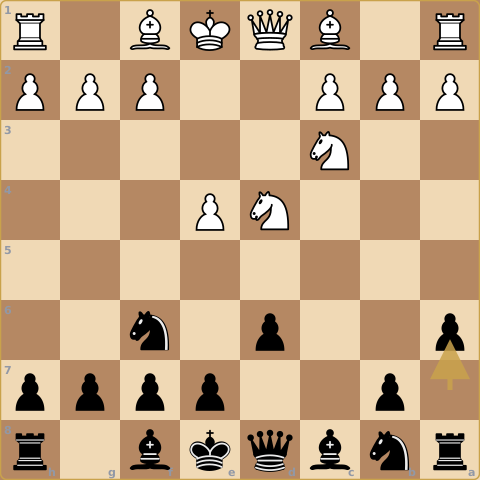
The English Attack: 6.Be3
The single most respected modern system, White develops actively and prepares a plan built around f3, Qd2, and often long castling into an all-out attacking race. Black responds with the same direct idea used against several of White's systems: 6...e5, "striking back and gaining space, the most direct response," refusing to let White's center and attacking plans develop uncontested.
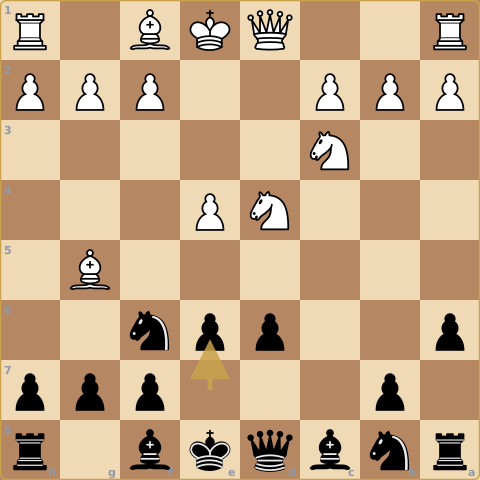
The classical Bg5 system: 6.Bg5
"The most theoretical, most deeply analyzed way to meet the Najdorf", and the home of the legendary Poisoned Pawn Variation. Black's reply, 6...e6, isn't just solid. It's close to mandatory here, and the tactical reason is concrete: after 6...e5?, White has 7.Bxf6! Qxf6 8.Nd5! Qd8 9.Nf5, and White's knights seize overwhelming control of the d5-square, a weakness Black has no good way to contest from there.
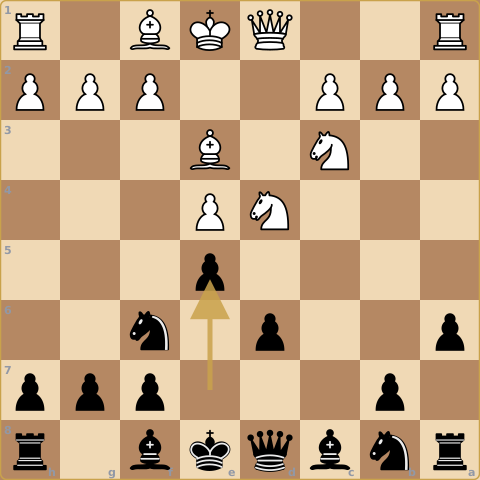
The quiet developing system: 6.Be2
A quiet, solid developing move, White isn't looking to attack right away, preferring calm development over an immediate confrontation. Black meets this the same way many of White's systems get met: 6...e5, striking back in the center and gaining real space while White's setup stays modest.
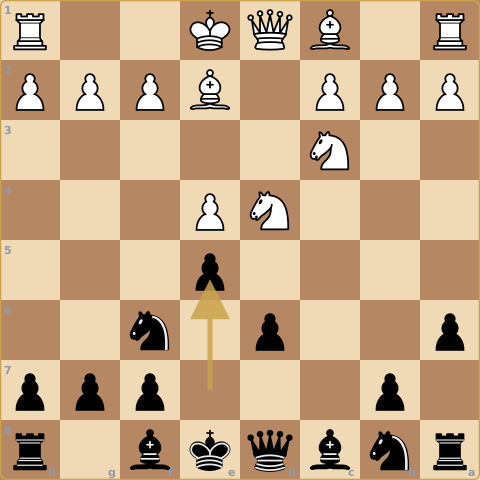
The patient system: 6.f3
A solid, patient move that supports a future e4-e5 push without rushing into anything premature. Black responds with the same core idea: 6...e5, striking back in the center immediately, the same underlying plan that works across most of White's approaches.
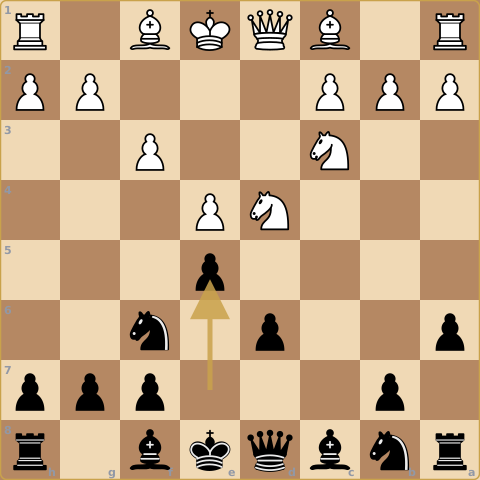
The Fischer-Sozin Attack: 6.Bc4
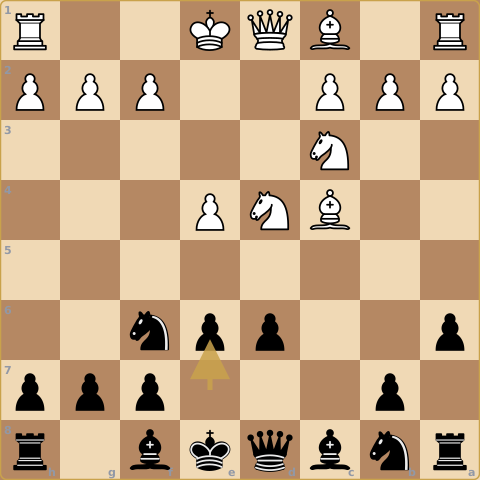
An aggressive alternative, aiming the bishop directly at f7, named after Bobby Fischer's own frequent use of this exact system, and one of the sharpest, most complicated lines in the whole Najdorf. Black responds with 6...e6, building a solid pawn wall on the a2-g8 diagonal, the exact diagonal White's bishop sits on, which blunts the bishop's aim at f7 and prepares safe development before the position gets any sharper.
Strategic ideas in the Sicilian Najdorf
A handful of ideas repeat across all five of White's systems:
- ...a6 isn't a slow move, it's doing real, specific work. Ruling out Nb5 and Bb5 tricks before they ever become relevant is exactly the kind of quiet, preventive idea that defines a lot of the deepest opening theory in chess.
- ...e5 and ...e6 are Black's two characteristic central responses. Which one applies depends on the specific system White chooses, recognizing which is called for matters more than having one fixed reaction to all five.
- Playing ...e5 is a real trade-off, not a free improvement. It gains dynamic piece activity, central space, and active queenside counterplay, but it comes at a genuine structural cost: a backward pawn on d6 and a hole on d5 that White's pieces, especially a knight, would love to occupy permanently. Whether that trade is worth it depends on the specific system on the board, which is exactly why this repertoire doesn't play ...e5 automatically against everything.
- The English Attack and the Bg5 system are the two most theoretically loaded branches. Both lead to genuinely sharp, deeply analyzed positions where precise, prepared knowledge matters more than general principles alone.
- This opening's reputation comes from real, sustained elite use, not just theoretical soundness. Fischer and Kasparov both built major parts of their own reputations on the Najdorf, that's a different, stronger kind of endorsement than an opening merely being "considered sound."
- Black's core development plan carries real consistency across systems as different as the quiet Be2 and the sharp English Attack. The specific move order and timing shift, but the underlying fighting spirit of the opening doesn't change.
Who should play the Sicilian Najdorf?
The Sicilian Najdorf is a strong fit for players roughly 1600 to 2400 rated, with a style best described as aggressive. If you want the single most respected, most fighting way to meet 1.e4 as Black, an opening with genuine, sustained use by multiple world champions across different eras, the Najdorf is about as serious a choice as exists anywhere in chess.
It's also a strong match if you're drawn to openings with real historical depth and continued elite relevance, this isn't a faded, once-fashionable idea, it remains the single most respected Sicilian system today, decades after Fischer and Kasparov both relied on it.
It's a weaker fit if you're newer to chess or specifically want a lower-theory opening. The Najdorf carries some of the deepest, most thoroughly analyzed theory in all of chess, particularly in the English Attack and Bg5 systems, genuinely rewarding players who already have real tactical and positional experience.
The Najdorf is one branch of the Sicilian rather than the whole thing. The Sicilian Dragon fianchettoes the bishop instead of playing ...a6, and leads to far sharper, more forcing positions. It's also worth knowing that many White players avoid the Open Sicilian altogether: the Alapin Variation with 2.c3 is the most common way of doing it, and you'll meet it more often than any single main line.
Common mistakes in the Sicilian Najdorf
- Underestimating the purpose of ...a6. It's not a slow, wasted move, it rules out real tactical tricks against Black's queenside before they matter, which is exactly why it's played so consistently across nearly every serious Najdorf repertoire.
- Treating all five of White's systems as requiring the same response. The English Attack, Bg5, Be2, f3, and Fischer-Sozin are genuinely different plans, knowing which one is actually on the board matters more than having one fixed reaction ready for all of them.
- Playing the English Attack or Bg5 systems casually. These are the two most theoretically loaded branches in the whole opening, treating them the same as the quieter systems means being genuinely underprepared for the sharpest positions you're likely to face.
- Assuming reputation alone makes an opening safe to play without real preparation. The Najdorf's depth is exactly why real, specific study matters here more than in most other openings, its elite pedigree reflects how seriously it rewards preparation, not how forgiving it is without it.
Frequently asked questions
Is the Sicilian Najdorf good for beginners?
It's better suited to players roughly 1600 and up. Its appeal is genuine fighting chances and elite pedigree, but its depth, particularly in the English Attack and Bg5 systems, means real preparation matters here more than in lower-theory openings.
Why is it called the Najdorf?
It's named after Miguel Najdorf, the Argentine grandmaster who developed and championed the system. It later became Bobby Fischer's signature weapon with the black pieces, including in his 1972 World Championship match against Boris Spassky. Garry Kasparov built much of his own reputation on it as well.
How many different systems does White have against the Najdorf?
Five genuinely major ones show up with real frequency in the data behind this repertoire: the English Attack (6.Be3), the classical 6.Bg5, the quiet 6.Be2, the patient 6.f3, and the aggressive Fischer-Sozin Attack (6.Bc4). This repertoire covers all five with real, tested continuations.
What is the Poisoned Pawn Variation?
It's the sequence 6.Bg5 e6 7.f4 Qb6 8.Qd2 Qxb2, one of the sharpest, most deeply analyzed lines in the entire 6.Bg5 system. Black grabs a pawn on b2 at real material and positional risk in exchange for genuine, well-tested counterplay. It's specifically associated with Fischer, who played it with real success throughout his career.
Did Bobby Fischer really rely on the Najdorf at world championship level?
Yes, it was his signature weapon with the black pieces, including in his 1972 World Championship match against Boris Spassky. Garry Kasparov is closely associated with the opening as well, giving the Najdorf a level of sustained elite use that few other openings can match.
Practice every real line against master-game replies, with a plain-English explanation on every move.
Practice Sicilian Najdorf free →