The Modern Defense: A Complete Guide
The Modern Defense begins 1.e4 g6. It's one of the most genuinely flexible ways for Black to meet 1.e4. Black fianchettoes the bishop immediately without committing to ...d6 or ...Nf6 yet, deciding on the rest of the setup only once White's own plan is clear. This guide covers a complete Black repertoire, built from 84,900 real, individually validated games across four combined datasets, answering all of White's genuinely major systems.
Quick facts
| Moves | 1.e4 g6 2.d4 Bg7 |
| Played as | Black |
| Best for | Roughly 900–1800 rated players |
| Style | Flexible |
| Games analyzed | 84,900 real, individually validated games across four combined datasets |
| Lines covered here | 26 |
What is the Modern Defense?
Most defenses to 1.e4 commit to a specific plan within the first few moves. The Modern Defense does something more patient: 1...g6 fianchettoes the bishop right away and keeps every other option open, deciding on ...d6, ...c6, or ...Nf6 only once White's plan is clear. This is genuinely different from the closely related Pirc Defense, where Black commits to ...d6 and ...Nf6 early. Here, that commitment is deliberately delayed.
The result is a real, hypermodern approach to the center: rather than contesting it directly or even committing to a specific structure early, Black waits to see exactly what White builds before deciding how to challenge it.
How to play the Modern Defense: move by move
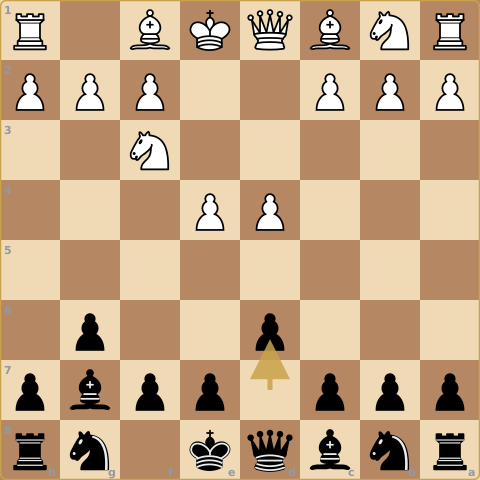
Every line below starts 1.e4 g6 2.d4 Bg7. From here, White has several genuinely major systems in the real-game data, and this repertoire answers each with real, tested continuations.
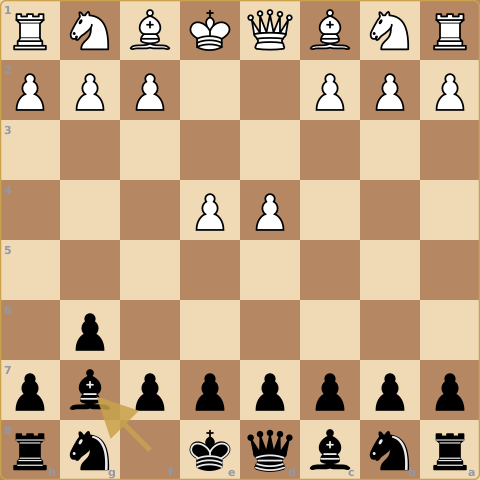
After 3.Nc3 d6, White's main systems
Black continues with 3...d6, supporting a future ...e5 or ...Nf6 and settling into a flexible setup once White has committed to developing the queenside knight. From here, White has several real, distinct plans.
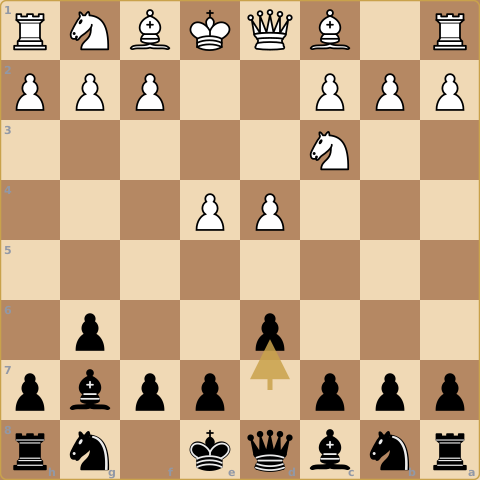
The 150 Attack / Tiger Modern: 4.Be3
A genuinely ambitious try, White develops the bishop actively and prepares Qd2 with an eye toward queenside castling and a kingside attack, a setup widely known as the 150 Attack. Black responds with 4...a6, the characteristic Tiger Modern setup, striking on the queenside with a coming ...b5 while deliberately delaying any kingside commitments of Black's own.
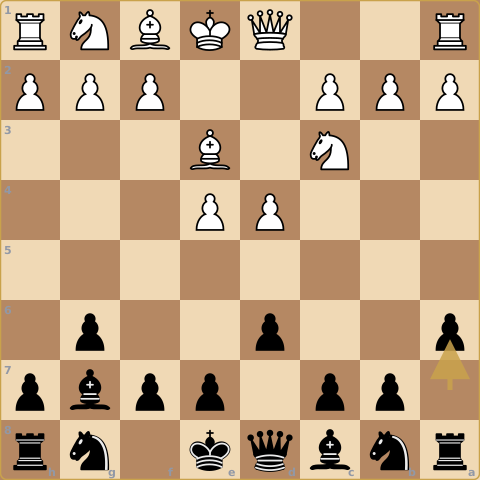
Worth clarifying, since the name gets misapplied often: the true Averbakh System is a different setup entirely, arising when White builds a genuine three-pawn center with 3.c4 d6 4.Nc3 rather than developing the bishop to e3. That broader central approach is a real, distinct system in its own right, closely resembling the King's Indian Defense in structure.
The Austrian-style approach: 4.f4
White grabs extra central and kingside space, preparing a further pawn advance rather than settling into a quieter setup. Black meets this with 4...Nf6, developing and adding real pressure to White's center.
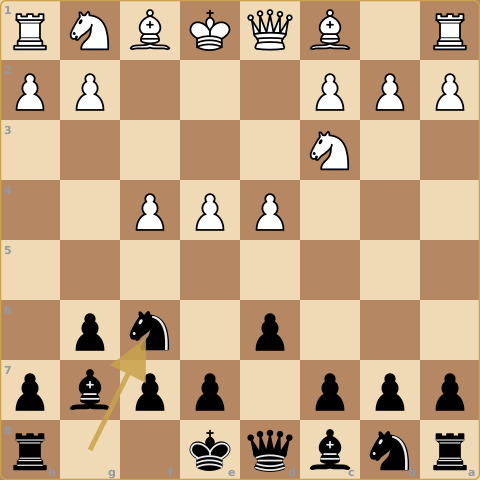
Worth knowing: 4...Nf6 here transposes directly into the Pirc Defense's own Austrian Attack. The exact same position arises whether Black gets there via the Modern's delayed move order or the Pirc's more committed one. Black can avoid that transposition and stay in purely Modern territory instead with 4...a6 or 4...c6, the latter heading into Gurgenidze-style setups that keep the position's Modern character intact.
The Classical Nf3 system: 3.Nf3
Rather than developing the queenside knight first, White brings the kingside knight out and prepares to castle, avoiding the sharpest theory available in other systems. Black continues with the same reliable plan: 3...d6, settling into the flexible setup that works across most of White's approaches.
Strategic ideas in the Modern Defense
A handful of ideas repeat across all of White's systems:
- Delaying ...d6 and ...Nf6 is deliberate, not indecisive. The whole point of 1...g6 first is waiting to see White's actual plan before committing further, this genuine flexibility is what separates the Modern Defense from the more committed Pirc Defense.
- The 150 Attack / Tiger Modern calls for immediate queenside counterplay. Rather than waiting, ...a6 followed by ...b5 strikes back right away, matching the ambition of White's own kingside setup.
- The true Averbakh System is a different, broader setup than the 150 Attack. It arises specifically from White building a genuine three-pawn center with 3.c4 d6 4.Nc3, not from 4.Be3, a naming mix-up worth getting right.
- 4...Nf6 against the Austrian-style approach transposes directly into the Pirc. It's the same real pressure point either way, the knight genuinely attacks e4 from f6, but 4...a6 or 4...c6 keeps the game in purely Modern territory instead.
- The Modern Defense and the Pirc share real structural overlap, but aren't identical. Recognizing when the game has transposed into genuinely Pirc-like structures, versus when it stays distinctly Modern, matters for choosing the right follow-up plan.
- White's specific system genuinely changes what Black should prioritize. The 150 Attack, Austrian-style, and Classical Nf3 systems call for different responses, recognizing which one is on the board matters more than having one fixed reaction to all of them.
Who should play the Modern Defense?
The Modern Defense is a strong fit for players roughly 900 to 1800 rated, with a style best described as flexible. If you want one of the most genuinely adaptable ways to meet 1.e4, one that delays commitment even further than the closely related Pirc Defense, the Modern Defense offers real, well-tested flexibility.
It's also a strong match if you enjoy hypermodern ideas and are comfortable making decisions reactively, based on what White actually builds, rather than following one fixed plan regardless of the opponent's setup.
It's a weaker fit if you specifically prefer a more committed, direct approach to the center from the first few moves, the Modern Defense's whole identity is patience and delayed commitment, which isn't every player's preferred style.
Common mistakes in the Modern Defense
- Committing to ...d6 or ...Nf6 too early, out of habit. The whole point of 1...g6 first is keeping these decisions open, rushing them before White's plan is clear gives up the opening's real flexibility.
- Playing passively against the 150 Attack instead of striking with ...a6 and ...b5. This system calls for immediate queenside counterplay, not a wait-and-see approach.
- Confusing the 150 Attack (4.Be3) with the true Averbakh System (3.c4). The two names get mixed up often, but they're genuinely different setups with different plans.
- Underestimating the pressure ...Nf6 puts on White's center in Austrian-style lines. It's a real attack on e4, not just a developing move, treating it as purely routine misses its actual point, and it's worth knowing this exact position also arises from the Pirc.
- Confusing the Modern Defense with the Pirc Defense. While the two share real structural overlap, the Modern's deliberately delayed ...d6 and ...Nf6 is a genuine, distinct strategic choice, playing on autopilot as though they were identical misses that distinction.
Frequently asked questions
Is the Modern Defense good for beginners?
It's a strong fit for players roughly 900 to 1800. Its appeal is genuine flexibility and a reactive, principled plan rather than sharp forced tactics, though deciding well between ...d6, ...c6, and ...Nf6 rewards some existing positional understanding.
What is the 150 Attack in the Modern Defense?
It's White's 4.Be3 setup, an ambitious plan preparing Qd2 and often queenside castling with kingside attacking chances. This repertoire meets it with the Tiger Modern setup, 4...a6 followed by ...b5, for immediate queenside counterplay of Black's own. It's genuinely distinct from the true Averbakh System, which specifically arises from 3.c4 d6 4.Nc3.
What is the main strategic difference between the Modern and the Pirc?
It comes down to timing. The Modern delays ...Nf6 for as long as possible, prioritizing immediate queenside expansion with ...a6 and ...b5, or central clamping with ...c6 and ...d5, before committing the knight at all. The Pirc settles into ...d6 and ...Nf6 right away. Both openings share the same underlying hypermodern idea, but the Modern's extra patience is what keeps its move order genuinely flexible.
How many different systems does White have against the Modern Defense?
Several genuinely major ones show up with real frequency in the data behind this repertoire, most notably the 150 Attack / Tiger Modern, the Austrian-style f4 approach, and the Classical Nf3 system. This repertoire covers all of them with real, tested continuations.
Practice every real line against master-game replies, with a plain-English explanation on every move.
Practice Modern Defense free →