The King's Indian Defense: A Complete Guide
The King's Indian Defense arises after 1.d4 Nf6 2.c4 g6. It's one of the most respected, most fighting ways for Black to meet 1.d4. Rather than contesting the center immediately, Black fianchettos the bishop, lets White build a big classical center, and strikes back later with real, well-timed pawn breaks. This guide covers a complete Black repertoire, built from 133,363 real games across five combined datasets, answering all five of White's genuinely major systems.
Quick facts
| Moves | 1.d4 Nf6 2.c4 g6 3.Nc3 Bg7 |
| Played as | Black |
| Best for | Roughly 1400–2200 rated players |
| Style | Aggressive, flexible |
| Games analyzed | 133,363 real games across five combined datasets |
| Lines covered here | 25 (across all five major White systems) |
What is the King's Indian Defense?
Most defenses to 1.d4 fight for the center immediately. The King's Indian does something different: 2...g6 and 3...Bg7 fianchetto the bishop first, deliberately allowing White to build a large, imposing pawn center with d4, c4, and often e4 too. This isn't passivity. It's a real, deliberate strategic choice. Black lets that center grow specifically so it becomes a target, then strikes back later with the characteristic ...e5 or ...c5 pawn breaks, using the fianchettoed bishop and the rest of the pieces to attack what White spent several moves building.
This hypermodern approach, provoke a big center, then attack it, is exactly what makes the King's Indian one of the most genuinely fighting defenses in chess. Both sides get real, unbalanced chances. The resulting positions rarely resolve into a quiet draw the way some more symmetrical openings can.
How to play the King's Indian Defense: move by move
Every line below starts 1.d4 Nf6 2.c4 g6. From here, White has five genuinely major systems in the real-game data, and this repertoire answers all five with one coherent underlying plan: fianchetto, let the center grow, strike back at the right moment.
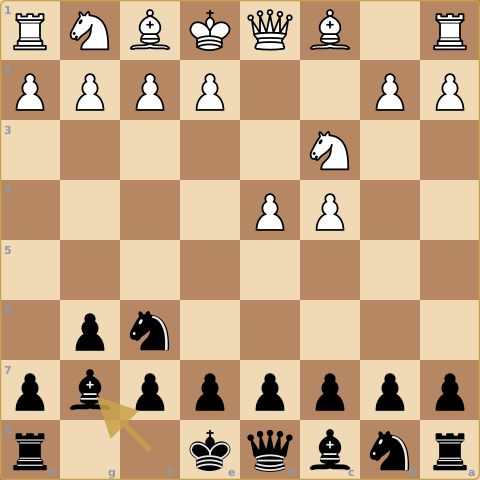
The Classical Main Line: 3.Nc3 Bg7 4.e4 d6 5.Nf3 O-O 6.Be2
The most traditional system, White builds the full classical center and develops naturally. Black completes the fianchetto, castles, and delivers the opening's signature move: 6...e5, "the King's Indian's signature central strike, challenge White's center directly." This is the whole point of the opening in a single move: rather than passively watching White's center sit there, Black directly contests it once development is complete.
White most often replies 7.d5, locking the center and setting up the game's defining middlegame race. With the center fixed, both sides attack on opposite wings: White expands on the queenside with c5, aiming to open lines against Black's king, while Black launches the King's Indian's signature kingside pawn storm, ...f5, followed by ...f4 and ...g5, throwing pawns forward to prise open White's king. Whoever breaks through first usually decides the game, which is exactly what makes these positions so sharp and so distinctly King's Indian.
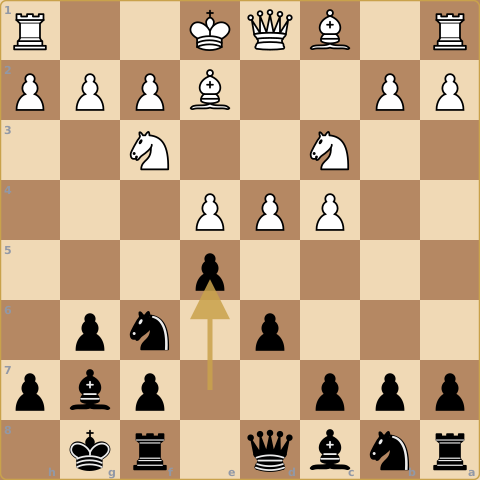
The Saemisch Variation: 3.f3
A slower, more ambitious plan, f3 supports a big e4 pawn in advance and prepares Be3 and Qd2 with real kingside attacking chances of White's own. Black continues with the same core plan regardless: 3...Bg7 4.e4 d6 5.Nc3 O-O, completing development and preparing the same ...e5 or ...c5 breaks this repertoire is built around, undeterred by White's slower, more prophylactic approach.
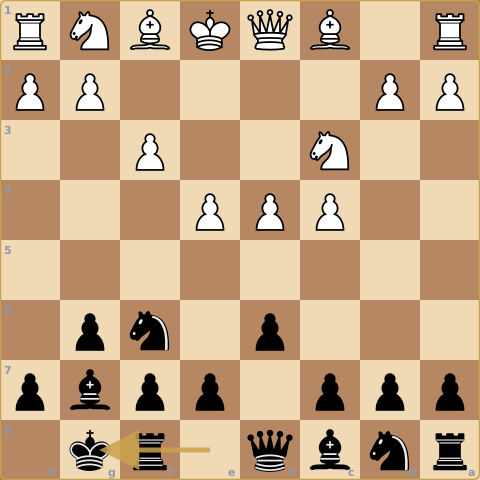
The Fianchetto Variation: 3.Nf3 Bg7 4.g3
A genuinely different plan from the sharper e4 systems, White fianchettos too, aiming for a slower, more strategic battle rather than an early central confrontation. Black responds simply: 4...O-O, castling into safety and continuing with the same underlying idea, adapted to a quieter position where the central breaks arrive a little later but remain just as central to Black's plan.
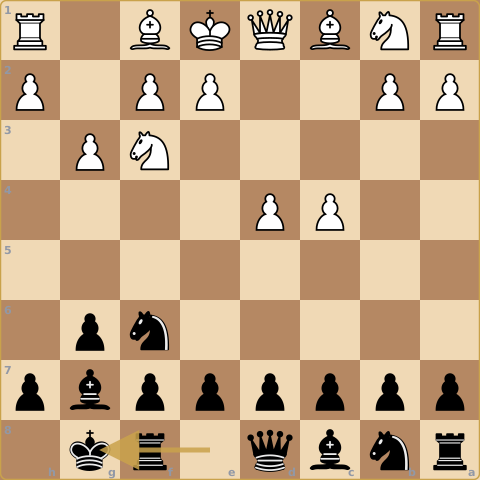
The Averbakh Variation: 4.e4 d6 5.Be2 O-O 6.Bg5
A flexible system that develops the bishop actively and keeps White's options open about exactly how to meet Black's central plans, rather than committing to a specific central structure right away. Black meets this with 6...c5, "striking on the queenside immediately rather than waiting", a real, well-tested alternative to the central ...e5 break, taking the fight to White's center from a different angle.
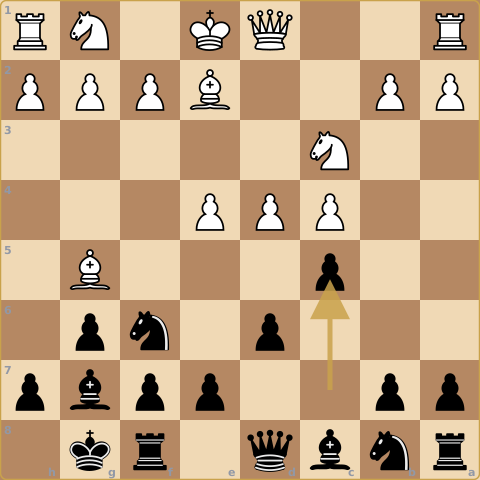
The reason Black avoids the more natural-looking 6...e5? here is a concrete tactic, not just a stylistic preference. After 7.dxe5 dxe5 8.Qxd8 Rxd8, White has 9.Nd5!, forking the pawn on c7 and the knight on f6, and that knight can't simply hop away: the bishop on g5 pins it to the rook on d8 along the same diagonal. Black ends up losing material either way, which is exactly why 6...c5 is the tested response instead.
Strategic ideas in the King's Indian Defense
A handful of ideas repeat across all five of White's systems:
- Letting White's center grow is deliberate, not passive. The entire point of the fianchetto-first approach is that a big center becomes a real target later, this is a genuine strategic choice, not a sign of falling behind.
- ...e5 and ...c5 are Black's two characteristic central breaks. Depending on which system White chooses, one or the other becomes the natural way to strike back, knowing which applies to which system matters more than having one fixed reaction to all five.
- Once White locks the center with d5, the game becomes a race on opposite wings. White pushes for queenside space with c5, aiming to open lines against Black's king, while Black answers with the signature ...f5, followed by ...f4 and ...g5, storming forward on the kingside to hunt White's king in turn. This race, not any single tactic, is the defining middlegame dynamic of the whole opening.
- The fianchettoed bishop on g7 is a long-term asset, not just an early developing move. It stays useful on the long diagonal throughout the whole game, which is exactly why completing the fianchetto early, before committing to anything else, is worth prioritizing.
- Black's core plan barely changes across systems as different as the Saemisch and the Fianchetto. Fianchetto, castle, then strike with a central pawn break, this same underlying structure carries through all five systems, even though White's own setups look quite different from each other.
- The King's Indian is genuinely fighting, not just theoretically sound. Both sides get real winning chances in most lines, which is exactly why this opening has such a lasting reputation among players who want a real fight from Black rather than a path toward equality and a draw.
Who should play the King's Indian Defense?
The King's Indian Defense is a strong fit for players roughly 1400 to 2200 rated, with a style best described as aggressive and flexible. If you want a genuinely fighting way to meet 1.d4, one where Black has real winning chances rather than just a path toward equality, the King's Indian is one of the most respected ways to get there, backed by a deep, well-tested body of theory across all five of White's major approaches.
It's also a strong match if you're comfortable with a hypermodern approach to the center, deliberately allowing White extra space early, trusting that it can be challenged effectively later, rather than fighting for central control from the very first moves.
It's a weaker fit if you specifically want to fight for central control immediately, the way more classical defenses to 1.d4 do, the King's Indian's whole identity depends on being comfortable letting White build first and attacking that structure later, which isn't every player's preferred approach to the opening.
The Grünfeld Defense begins the same way and then does something quite different: instead of ...d6 and a slow buildup, Black hits the centre immediately with ...d5 and plans to trade it off rather than attack it later. Worth knowing about, since White players who prepare for one often struggle against the other. If you'd rather fight for the centre with a piece than provoke it, the Nimzo-Indian is the classical alternative from the same opening moves.
Common mistakes in the King's Indian Defense
- Contesting the center too early instead of completing the fianchetto first. The whole point of this opening is completing development (bishop to g7, king castled) before striking back, abandoning that sequence gives up the structural idea the whole repertoire is built around.
- Delaying the central break for too long once development is complete. ...e5 or ...c5, depending on the system, is meant to arrive once the fianchetto and castling are done, waiting too long lets White's center become an asset rather than the target it's meant to be.
- Treating all five of White's systems as requiring the same response. The Classical, Saemisch, Fianchetto, Averbakh, and Four Pawns Attack/Makagonov setups are genuinely different, knowing which one is actually on the board matters more than having one fixed reaction ready for all of them.
- Underestimating the Saemisch's own attacking chances. White's f3-and-kingside-expansion plan is a real, ambitious try in its own right, not just a slower version of the Classical system, treating it too casually can mean being unprepared for White's own initiative.
Frequently asked questions
Is the King's Indian Defense good for beginners?
It's a strong fit slightly above absolute-beginner level, rated well for roughly 1400 to 2200. Its appeal is a genuinely fighting, principled plan: fianchetto, let the center grow, strike back. That's a real alternative to passive equality-seeking, though its hypermodern approach to the center rewards some existing positional understanding.
Why does Black let White build such a big center in the King's Indian?
Because that center becomes a real target once Black finishes developing. This is a deliberate, well-tested hypermodern strategy, not a sign of falling behind. The fianchettoed bishop and the coming central pawn breaks are specifically built to attack the structure White spends the opening constructing.
How many different systems does White have against the King's Indian?
Five genuinely major ones show up with real frequency in the data behind this repertoire: the Classical Main Line, the Saemisch, the Fianchetto, the Averbakh, and the Four Pawns Attack (5.f4) / Makagonov System (5.h3). This repertoire's core plan, fianchetto, let the center grow, strike back with ...e5 or ...c5, applies against all five, with the deepest move-by-move coverage on the four systems detailed above.
What's the difference between ...e5 and ...c5 as Black's central break?
Both are real, well-tested ways to strike back at White's center. Which one applies depends on the specific system White chooses: ...e5 is the signature break against the Classical Main Line and Saemisch, while ...c5 is the characteristic response to the more flexible Averbakh Variation.
Is the King's Indian Defense considered a drawish opening?
No, quite the opposite. It has a lasting reputation as one of the most genuinely fighting defenses in chess, with real winning chances for both sides in most of its main lines. That's exactly why it's remained popular among players who want more than a path toward a quiet draw.
Practice every real line against master-game replies, with a plain-English explanation on every move.
Practice King's Indian Defense free →