The French Advance Variation, Explained
The Advance Variation arises after 1.e4 e6 2.d4 d5 3.e5, and it's one of the most direct, principled ways for White to meet the French Defense: rather than resolving the central tension, White pushes forward, grabbing real space and locking the structure on White's own terms. This guide covers a complete White repertoire against it, built from 40,775 real master games, answering Black's genuinely common replies with one coherent, engine-verified plan rather than a scattered set of separately-memorized responses.
Quick facts
| Moves | 1.e4 e6 2.d4 d5 3.e5 |
| Played as | White |
| Best for | Roughly 900–1800 rated players, especially club and tournament players |
| Style | Solid, positional |
| Games analyzed | 40,775 real master games, drawn from real tournament and online play |
| Lines covered here | 25 (across Black's real, common replies) |
What is the Advance Variation?
The French Defense begins 1...e6, preparing ...d5 to challenge White's center. When White plays 2.d4 d5, there are several genuinely different ways to handle the resulting central tension: trade it off, defend it, or push past it entirely. The Advance Variation is the third option: 3.e5 locks the pawn structure immediately, gaining real space rather than inviting an exchange. This is a deliberate trade-off: White gives up the chance to simplify the position early in exchange for a long-term spatial advantage that Black has to actively work to neutralize, rather than something that resolves itself.
There's a second, quieter consequence of 3.e5 worth understanding on its own terms: it doesn't just lock the center, it locks in Black's light-squared bishop on c8, behind the newly-formed e6/d5 pawn chain. That bishop has no good diagonal left to develop on until the structure changes, which is exactly the "bad bishop" problem the French Defense is famous for. This is the key structural difference from the Caro-Kann's own Advance Variation, where Black's light-squared bishop gets out to f5 before ...e6 is ever played, avoiding the same problem entirely. Both openings share the same underlying philosophy for White: grab space with a central pawn push rather than resolving the tension early, and let that space translate into a long-term structural advantage over the course of the whole game, not just the opening moves. But the resulting bishop situations for Black are genuinely different, and it's worth knowing why.
How to play the French Advance: move by move
Every line below starts 1.e4 e6 2.d4 d5 3.e5 c5 4.c3, reinforcing the center before Black can pile up enough pressure on d4 to win it back. From here, Black has two genuinely common replies in the data, both aimed at the same target: White's d4 pawn. One attacks it directly, and the other builds toward attacking it once the position opens further.
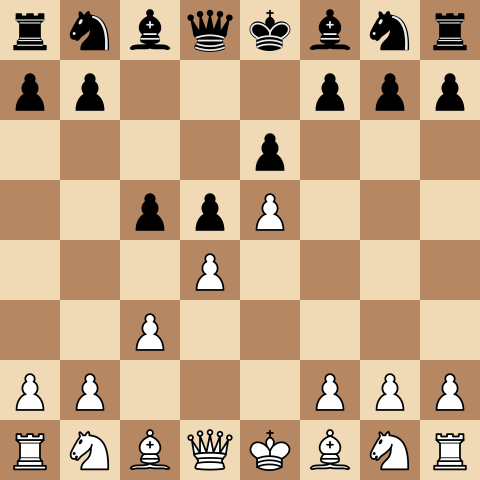
Black's main plan: 4...Nc6, adding pressure on d4 (the Paulsen Attack)
The most common continuation, Black develops a piece while adding a second attacker on d4. White responds with 5.Nf3, developing and adding another defender to the same square, keeping the balance of attackers and defenders firmly in White's favor. From here, Black has three genuinely common ways to continue:
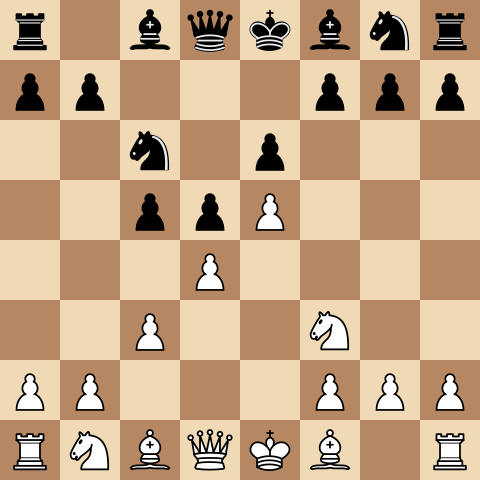
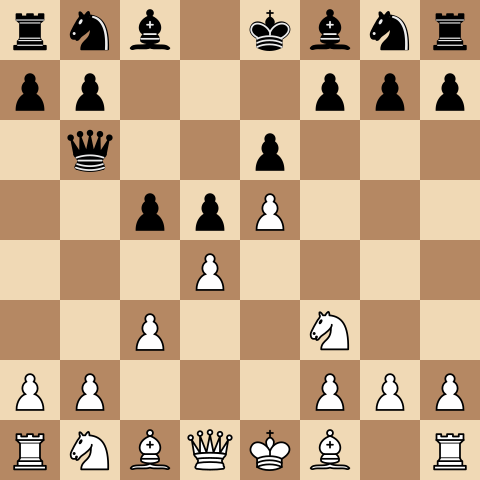
- 5...Qb6, developing the queen actively and eyeing the b6-d4 diagonal, pressure that becomes real the moment the c5 pawn tension resolves, while also eyeing the b2 pawn. This is the single most tested continuation in the whole repertoire. White meets it with 6.a3, and it's worth being precise about what this move actually does: it's not just prophylaxis. Ruling out ...Bb4 and ...Nb4 tricks is a real, useful side effect, but the main point is offensive: a3 directly prepares 7.b4, a genuine, verified queenside space grab that this repertoire follows up with in several real lines. From here, Black can lock the structure further with ...c4, gaining queenside space in exchange for releasing the central tension entirely, or continue developing with ...Nh6 (heading toward the thematic f5 square) or ...Bd7.
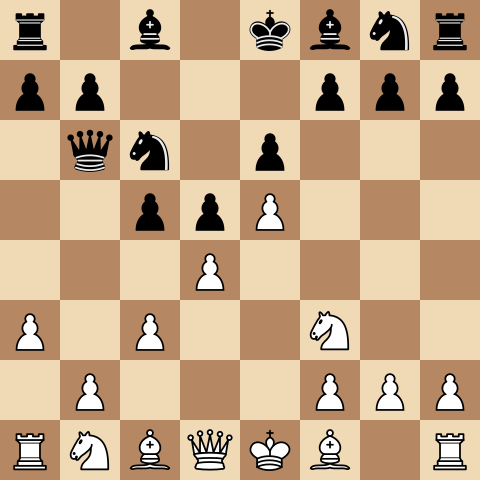
- 5...Bd7, developing calmly and preparing to castle queenside or reroute the bishop, sometimes followed by the sharp ...f6, striking directly at White's e5 pawn. White can't castle kingside immediately here, the f1-bishop is still sitting in the way, so the real, verified answer is 6.Be2, simple, solid development that clears the path and prepares to castle properly. Only once that's done, typically after Black's ...f6, does White actually castle with O-O, tucking the king away before the position opens up further.
- 5...Nge7, developing the knight to a flexible square that keeps the option of a later ...Nf5 in reserve, aiming the knight at the same key square other branches reach by different routes. This flexible development is a genuine alternative to the more committal ...Bd7 or ...Qb6 choices. It delays a firm commitment to queenside or kingside play while still developing a piece toward a useful square.
Black's alternative plan: 4...Qb6, going straight for pressure
Rather than developing a piece first, Black brings the queen out immediately, aiming it down the same b6-d4 diagonal right away and eyeing b2 in the same move. White continues with the same natural development, 5.Nf3, and Black typically follows up with either ...Nc6 (transposing back toward the main plan above) or ...Bd7, reaching similar structures to the main line through a different move order. In practice, this move-order flexibility means White's repertoire doesn't actually need to treat this as a genuinely separate plan. The same responses and the same underlying reasoning apply regardless of whether Black develops the knight or the queen first.
Strategic ideas in the French Advance
A handful of ideas repeat across almost every line in this repertoire, and recognizing them explicitly is worth more than treating each of the 25 lines as a separate thing to memorize:
- e5 is a space-grabbing decision, not a passive one. Locking the structure with an advance, rather than trading it off, is a genuinely aggressive strategic choice. It claims territory Black has to work to challenge, rather than simplifying the position early.
- e5 also locks in Black's light-squared bishop, the classic "French bad bishop" problem. Once the e6/d5 pawn chain is set, Black's bishop on c8 has nowhere good to go until the structure changes. This is the direct opposite of the Caro-Kann Advance, where Black gets the analogous bishop out to f5 before playing ...e6, avoiding the problem entirely. Recognizing that this structural asymmetry exists, and that it's a real, ongoing factor in these positions, is part of understanding why White's space advantage here tends to be durable rather than temporary.
- c3 exists specifically to keep d4 defensible against Black's coming pressure. Both of Black's main replies (...Nc6 and ...Qb6) aim squarely at this one pawn, and this repertoire's entire early move order is built around defending it enough times to hold, whether the attack arrives immediately or only after the central tension resolves later in the game.
- a3 is offense as much as it's prevention. It does rule out ...Bb4 and ...Nb4 tricks, but treating it as pure prophylaxis undersells the move. Its main job is preparing b4, a real, verified queenside space grab in this repertoire, not just tidying up loose ends.
- When Black strikes with ...f6, developing the bishop and then castling is the correct, principled response. White can't castle immediately with the bishop still on f1, so Be2 comes first. Getting the king safe once that's done matters more here than trying to hold onto every pawn immediately.
- Black's ...c4 lock is a real strategic choice, not a mistake. Releasing the central tension in exchange for guaranteed queenside space is a legitimate plan worth recognizing, not a sign Black has gone wrong.
- Pressure that isn't active yet is still worth planning around. The b6-d4 diagonal in the Qb6 lines doesn't do anything while Black's own c5 pawn sits on it, but the moment that tension resolves, through an exchange on d4, for instance, the queen's influence becomes real. Recognizing latent pressure like this, not just pieces that are attacking something right now, is part of what separates strong positional play from purely reactive play, and it's a pattern worth watching for well beyond just this one opening.
Who should play the French Advance?
The French Advance is a strong fit for players roughly 900 to 1800 rated, with a style best described as solid and positional. If you want a direct, principled way to meet the French Defense that doesn't require memorizing the sharpest tactical complications of other systems against it, the Advance Variation offers a genuinely sound, space-based plan that holds up against Black's real, common tries.
It's also a strong match if you already play (or are considering) the Advance Variation against the Caro-Kann as White. Since both share the same underlying philosophy of claiming space with an early pawn push rather than resolving central tension, the pattern-recognition from one repertoire carries directly into the other. Both openings ask the same core question of your opponent too: can they generate enough pressure against your space advantage before you consolidate it into something permanent?
It's a weaker fit if you're looking for the sharpest, most forcing tactical battle against the French available to White. Other systems against the French Defense can lead to sharper, more immediately tactical positions. The Advance Variation's strength is structural and long-term, not a quick knockout.
Common mistakes in the French Advance
- Trading the center away instead of pushing with e5. This gives up the entire structural point of choosing the Advance Variation in the first place. The space gained by pushing forward is the whole plan, and reverting to a trade-based approach forfeits the exact advantage this repertoire is built to secure.
- Neglecting to reinforce d4 with c3 before Black piles up pressure on it. Both of Black's main replies specifically target this pawn. Falling behind on defenders here can lose it outright, and losing the center pawn generally also loses the entire spatial advantage the whole opening was built around.
- Skipping a3 because it "doesn't do anything." It's a small move with a specific, real purpose: ruling out ...Bb4/...Nb4 tricks and preparing the real follow-up, b4. Treating it as a wasted tempo misses that it's doing offensive work too, not just tidying up loose ends.
- Panicking when Black plays ...c4. This is a legitimate structural choice by Black, not a threat requiring an immediate reaction. Continue with your own plan rather than trying to prevent something that isn't actually dangerous.
- Confusing latent pressure with an active threat. The Qb6 lines look alarming to newer players because the queen appears to be bearing down on d4, but while Black's own c5 pawn sits between them, that pressure isn't live yet. Reacting as though it already is can lead to unnecessary, weakening concessions earlier than the position actually calls for.
Frequently asked questions
Is the French Advance good for beginners?
It's a strong fit slightly above absolute-beginner level, rated well for roughly 900 to 1800. Its appeal is a clear, principled plan (grab space, defend d4, develop naturally) rather than sharp forced tactics, making it genuinely learnable without heavy memorization, and the same core plan carries across nearly every real reply Black has, which reduces how much needs to be held in memory at once.
What is the main idea of the Advance Variation against the French?
Rather than trading off the central tension after 2...d5, White pushes with 3.e5, locking the structure and gaining real space. This claims territory Black has to actively work to challenge, rather than simplifying the position early, and it's the same underlying idea behind the Advance Variation against the Caro-Kann on the other side of the board.
Why does Black usually play ...Qb6 or ...Nc6 against the French Advance?
Both moves aim at White's d4 pawn, which becomes the central target of the whole structure once the position locks with e5. Nc6 attacks it directly, while Qb6 builds latent pressure along the b6-d4 diagonal that becomes active once the c5 pawn tension resolves. This repertoire's early moves (c3, Nf3, and eventually a3 preparing b4) are built specifically around defending that pawn against both.
Is the French Advance the same idea as the Caro-Kann Advance?
Philosophically, yes, and even the key move is shared: both openings feature 3.e5, and both are about claiming space with an early central pawn push rather than resolving the tension immediately, just from opposite sides of the board (White here, Black in the Caro-Kann). But there's one real structural difference worth knowing precisely: in the Caro-Kann, Black gets the light-squared bishop out to f5 before playing ...e6, so it never gets shut in. In the French, the move order runs the other way (...e6 comes before the bishop can escape), so 3.e5 locks that same bishop behind the pawn chain on c8, the classic French "bad bishop." The space-grabbing idea is identical. What each side's light-squared bishop is doing about it is not.
Does White's space advantage in the French Advance last the whole game?
Not automatically. It has to be maintained and converted, the same as any structural advantage in chess. That's exactly why the repertoire's early moves (reinforcing d4 with c3, developing with tempo-neutral natural moves, and playing a3 to prepare b4) matter as much as the initial e5 push itself. Space given up carelessly later in the game can evaporate just as easily as it was gained, so the early structural work here is an investment, not a one-time gain.
Related openings
- Caro-Kann Advance (White) — The exact same strategic philosophy (grab space, lock the structure) applied against the Caro-Kann instead of the French, learn one, and the other follows naturally.
- Italian Game — White's answer to 1...e5, completing coverage of Black's most common replies to 1.e4 alongside the French Advance and Alapin.
Practice every real line against master-game replies, with a plain-English explanation on every move.
Practice French Advance free →