The Dutch Defense: A Complete Guide
The Dutch Defense begins 1.d4 f5. It's one of the most immediately ambitious ways for Black to meet 1.d4. Rather than developing quietly, Black stakes a real claim on kingside space on the very first move. This guide covers a complete Black repertoire, built from 36,923 real games across four combined datasets, answering White's major systems with real, tested continuations.
Quick facts
| Moves | 1.d4 f5 |
| Played as | Black |
| Best for | Roughly 1200–2000 rated players |
| Style | Aggressive |
| Games analyzed | 36,923 real games across four combined datasets |
| Lines covered here | 23 |
What is the Dutch Defense?
Most replies to 1.d4 develop naturally for several moves before committing to a specific structure. The Dutch does something more direct: 1...f5 immediately stakes a claim on kingside space. From there, the resulting structures genuinely differ depending on how both sides continue: the sharp Staunton Gambit, the solid Classical setup, the rock-like Stonewall formation, or the actively fianchettoed Leningrad Variation.
This early commitment is exactly what gives the Dutch its identity: rather than keeping every option open for as long as possible, Black decides early that kingside space and active piece play matter more than maximum flexibility.
How to play the Dutch Defense: move by move
Every line below starts 1.d4 f5. From here, White has several genuinely common systems in the real-game data, and this repertoire answers each with real, tested continuations.
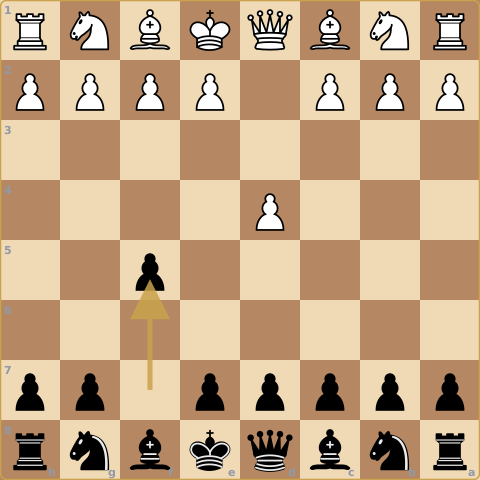
The Staunton Gambit: 2.e4
White's most aggressive try, offering a pawn immediately in exchange for fast development and open lines before Black's structure is ready to handle them. Black accepts with 2...fxe4, and after 3.Nc3, developing naturally and keeping options open, continues with 3...Nf6, developing while genuinely holding onto the extra pawn Black just won. This is a real, principled way to meet the gambit, not simply grabbing material and hoping, but developing naturally while the extra pawn stays defended.
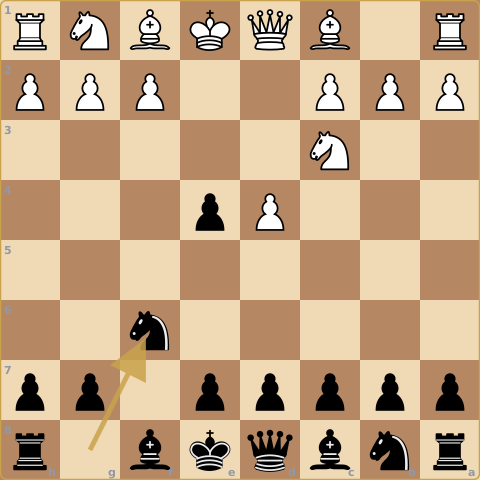
White's early Bg5 tries
Rather than committing to a specific central plan, White can develop the bishop actively right away. Black meets this directly: 2...h6, asking the bishop a direct question right away rather than developing around it, forcing White to make a decision before the position develops any further.
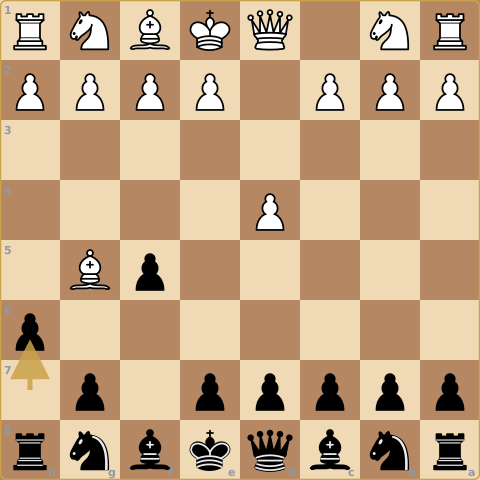
One warning worth taking seriously here: don't try to trap the bishop with 3.Bh4 g5 4.Bg3 f4?. That greedy pawn grab runs straight into 5.e3!, and White is suddenly threatening 6.Qh5#. Blocking with 5...h5 doesn't fully solve the problem either: 6.Bd3 Rh6 7.Qxh5+! Rxh5 8.Bg6# delivers mate anyway. The lesson isn't to avoid 2...h6 itself, it's to avoid greedily grabbing the bishop with ...g5 and ...f4 before finishing development.
The Classical and Stonewall structures: 2.c4
White expands with the flank pawn, keeping central options flexible. Black continues naturally with 2...Nf6, developing while preparing to complete the setup, and after 3.Nc3, White develops naturally too. From here, Black's characteristic choice is 3...e6, the move that actually leads to both the Classical and Stonewall structures. (3...g6 instead heads toward a completely different setup, the Leningrad Variation, covered separately below.) The Classical setup completes with ...Be7, developing the bishop naturally rather than fianchettoing it. The Stonewall structure instead continues with ...d5 and ...c6, locking the center into the well-known formation built around d5, e6, f5, and c6 all supporting each other.
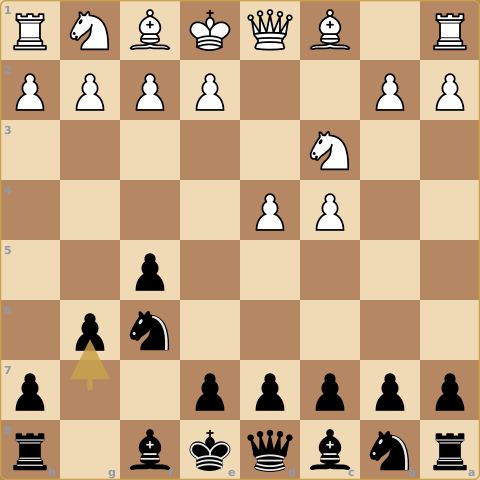
The Leningrad Variation: an active, mirrored fianchetto
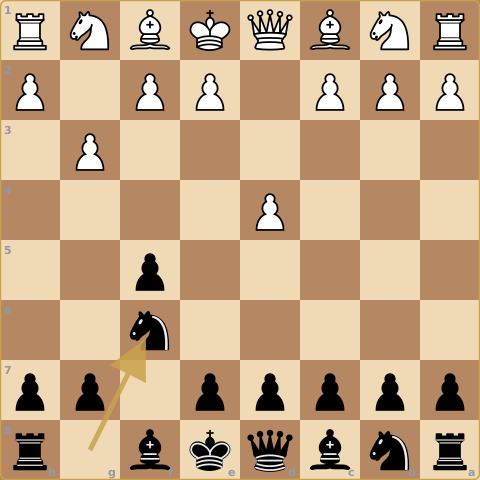
3...g6 is Black's other option after 2.c4 Nf6 3.Nc3 (or via the transposing 2.g3), and it leads exclusively to the Leningrad Variation, a genuinely different setup from the Classical and Stonewall structures above. Rather than the calmer ...e6 plans, Black mirrors White's own kingside fianchetto: ...Bg7 completes the setup, and the game takes on a more active, ambitious character, contesting the center with pieces rather than settling into a purely defensive structure.
Strategic ideas in the Dutch Defense
A handful of ideas repeat across this entire repertoire:
- 1...f5 is a real, immediate commitment, not a slow developing move. The Dutch's whole identity comes from claiming kingside space right away, which is exactly what separates it from the more flexible, wait-and-see replies to 1.d4.
- The Staunton Gambit's extra pawn is genuinely worth holding onto, not just material to survive with. Developing naturally while keeping the pawn defended is a real, principled plan, not a desperate scramble to avoid losing the material back.
- The Stonewall structure trades flexibility for genuine solidity. Locking the center with d5, e6, f5, and c6 gives up some dynamism in exchange for a formation that's genuinely difficult for White to crack open.
- The Stonewall's plan rests on two pillars: an outpost and a rerouted bishop. The locked pawn chain hands Black a permanent outpost on e4 for a knight, a square White struggles to ever contest. The trade-off is Black's light-squared bishop, which starts genuinely bad, boxed in behind its own pawn chain, so the real plan is rerouting it to an active diagonal, either ...Bd7-e8-h5, swinging it out via e8, or ...b6 and ...Ba6, fianchettoing it on the other flank instead.
- The Leningrad Variation is meaningfully more active than the Classical setup. Mirroring White's own fianchetto leads to a different, more ambitious character than the calmer, more solid Classical lines, recognizing which structure is actually on the board matters.
- Which structure Black ends up in depends on real, early decisions, not just White's choices. The Classical, Stonewall, and Leningrad setups are all genuinely different plans reached through Black's own move-order choices as much as White's.
Who should play the Dutch Defense?
The Dutch Defense is a strong fit for players roughly 1200 to 2000 rated, with a style best described as aggressive. If you want a direct, ambitious way to meet 1.d4 that claims real kingside space immediately rather than developing quietly, the Dutch offers a genuinely fighting alternative to the more common, more flexible replies.
It's also a strong match if you're comfortable committing to a specific structure early in exchange for a clearer, more active plan, the Dutch rewards players who'd rather know what kind of game they're playing from move one than keep every option open for as long as possible.
It's a weaker fit if you specifically want maximum flexibility in the opening, or if you're not prepared to meet the sharp Staunton Gambit with real, specific knowledge, declining or mishandling that gambit can hand White real, uncontested development.
The Leningrad setup here fianchettoes the bishop much like the King's Indian Defense does, so players who enjoy one often take to the other. The King's Indian is the more thoroughly mapped of the two if you want a better-tested option against 1.d4.
Common mistakes in the Dutch Defense
- Panicking against the Staunton Gambit instead of developing naturally. 2...fxe4 followed by natural development, holding onto the extra pawn, is a real, sound plan, rushing to give the pawn back out of fear gives up the point of accepting the gambit in the first place.
- Confusing the Classical, Stonewall, and Leningrad structures. These are genuinely different plans with different resulting middlegames: 3...e6 heads toward the Classical or Stonewall setups, while 3...g6 heads toward the Leningrad exclusively. Treating them as interchangeable means being unprepared for whichever one actually arises.
- Delaying the fianchetto against early Bg5 tries. Completing development safely with ...g6 matters more than trying to hold onto every option indefinitely once White has committed to challenging the kingside setup.
- Treating the Stonewall's solidity as passivity. The locked structure trades some flexibility for real strength, playing it as though the position calls for constant activity misunderstands what the structure is actually for.
Frequently asked questions
Is the Dutch Defense good for beginners?
It's a strong fit for players roughly 1200 to 2000. Its appeal is a clear, principled plan (claim kingside space, pick a structure, develop naturally) rather than deep forced memorization, though meeting the Staunton Gambit correctly does require some real, specific preparation.
What is the Staunton Gambit?
It's White's most aggressive response to the Dutch, 2.e4, offering a pawn immediately for fast development and open lines. This repertoire's answer is to accept the pawn and develop naturally while holding onto it, a real, principled plan rather than simply surviving the complications.
What's the difference between the Classical, Stonewall, and Leningrad setups?
All three are real, distinct ways to organize Black's position after 1...f5, and the key branch point is Black's own choice on move 3: 3...e6 heads toward the Classical or Stonewall, while 3...g6 heads toward the Leningrad exclusively. The Classical setup is the lighter structure, completed with ...Be7; the Stonewall locks the center with d5, e6, f5, and c6 for genuine long-term solidity; and the Leningrad mirrors White's own fianchetto with ...g6 and ...Bg7 for a more active, ambitious game than the calmer Classical lines.
Should Black accept the Staunton Gambit's pawn?
Yes, this repertoire's answer is to accept with 2...fxe4 and develop naturally afterward, genuinely holding onto the material rather than giving it back prematurely. It's a real, well-tested plan, not just a risky grab.
Is the Dutch Defense considered sound at higher levels of chess?
Yes, while less common than some other replies to 1.d4, its structures (particularly the Stonewall and Leningrad) are genuinely respected, well-tested systems rather than a surprise weapon that only works against unprepared opponents.
Practice every real line against master-game replies, with a plain-English explanation on every move.
Practice Dutch Defense free →