The Benko Gambit: A Complete Guide
The Benko Gambit arises after 1.d4 Nf6 2.c4 c5 3.d5 b5. It's one of the most durable pawn sacrifices in chess. Rather than looking for a quick tactical knockout, Black gives up a pawn for lasting pressure down the open a- and b-files that persists deep into the middlegame and even the endgame. This guide covers a complete Black repertoire, built from 35,250 real, individually validated games, answering all of White's genuinely major responses.
Quick facts
| Moves | 1.d4 Nf6 2.c4 c5 3.d5 b5 |
| Played as | Black |
| Best for | Roughly 1300–2100 rated players |
| Style | Aggressive |
| Games analyzed | 35,250 real, individually validated games |
| Lines covered here | 24 |
What is the Benko Gambit?
Most gambits offer material for a fast, sharp attack. The Benko Gambit does something different: 3...b5 offers a pawn not for immediate tactics, but for genuine, lasting positional pressure, ripping open the a- and b-files for Black's rooks before White finishes developing, with a fianchettoed bishop adding to the pressure for the rest of the game. This is a gambit for positionally-minded players, not a quick knockout attempt.
The opening takes its name from Pal Benko, the Hungarian-American grandmaster who popularized it from the late 1960s onward and published a dedicated book on it in 1974. It's also known as the Volga Gambit in Eastern Europe, after an earlier Soviet analysis. Its elite pedigree is real and specific: Bobby Fischer played it twice in his famous 1992 rematch against Boris Spassky, and it has been used at least once by essentially every recent classical World Champion.
How to play the Benko Gambit: move by move
Every line below starts 1.d4 Nf6 2.c4 c5 3.d5 b5. From here, White has several genuinely major responses in the real-game data, and this repertoire answers each with real, tested continuations.
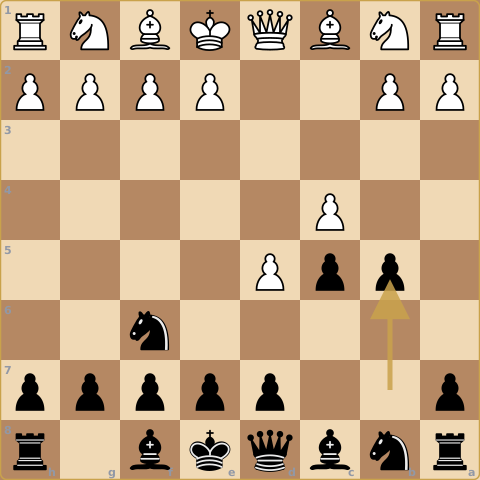
The gambit accepted: 4.cxb5 a6
White accepts the pawn, and Black immediately strikes back at it: 4...a6, striking at the pawn on b5 immediately. From here, White has several real, distinct ways to continue.
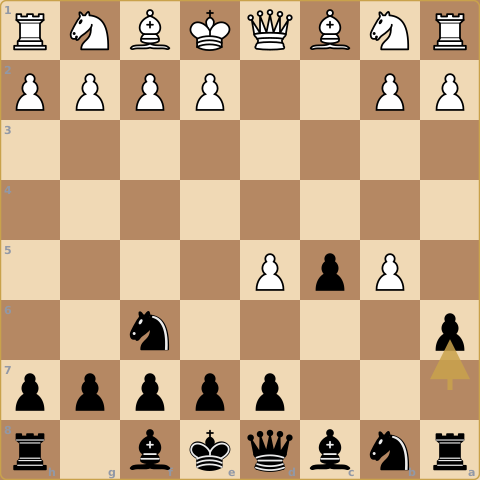
The main Fianchetto Variation: 5.bxa6
White accepts the second pawn as well, heading into the opening's most common structure. Black responds with 5...g6, preparing to fianchetto the bishop, the key idea of the whole gambit, setting up the long-term pressure that defines the entire opening.
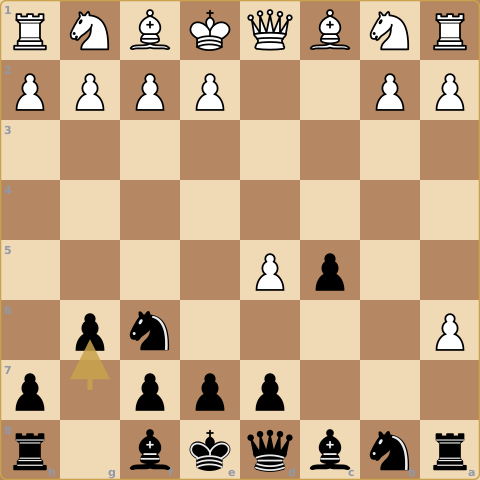
The pawn-holding line: 5.b6
Rather than letting Black recapture, White pushes the pawn forward to hold onto the extra material. Black responds with 5...d6, developing solidly and preparing to challenge the advanced pawn later, a real, patient plan to eventually win back White's overextended b6 pawn.
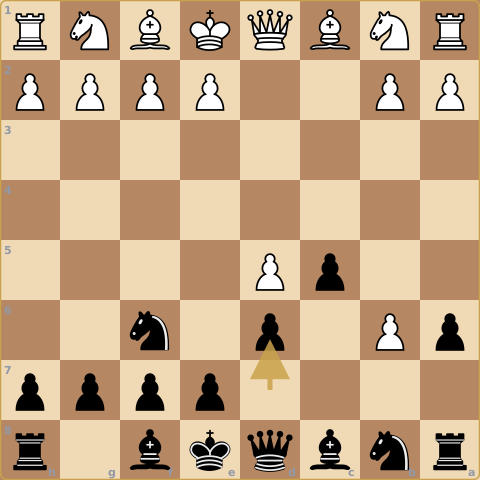
The Declined Variation: 5.e3
White declines to capture on a6 at all, developing solidly instead of grabbing further material. Black continues with the same defining idea regardless: 5...g6, preparing to fianchetto the bishop, the same key idea as always. The core plan of this repertoire barely changes even when White avoids the critical lines.
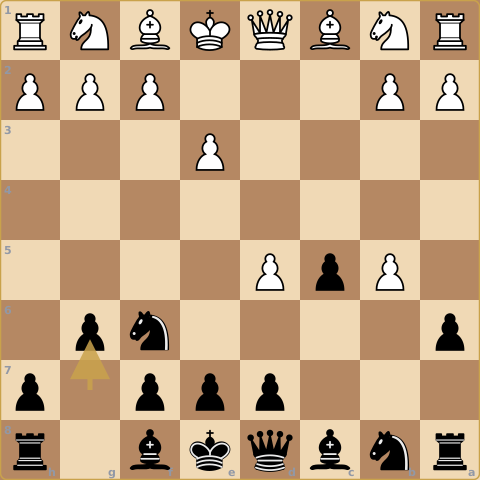
Strategic ideas in the Benko Gambit
A handful of ideas repeat across all of White's responses:
- The pawn sacrifice is genuinely durable, not a short-term tactical gimmick. The pressure down the open a- and b-files lasts deep into the middlegame and often into the endgame, this is real, lasting compensation, not a quick attack that fizzles if it doesn't land immediately.
- The Benko is unusual among gambits: Black actively seeks queen trades. Most gambits depend on the queens staying on the board to fuel an attack, but here the pressure down the open a- and b-files is just as lethal in an endgame as it is in the middlegame. Trading queens doesn't blunt Black's compensation the way it would almost anywhere else.
- Black's ideal piece coordination is specific and worth learning. Rooks belong on a8 and b8, doubled down the open files. The dark-squared bishop stays on g7, bearing down the long diagonal. The knights reroute toward b6 and c5 or e5, both real, active posts. And trading light-squared bishops with ...Bxf1 Kxf1, when the chance arises, strips White of castling rights for good, a genuine, lasting structural gain beyond the missing pawn itself.
- The fianchettoed bishop is central to the whole plan, not just a developing move. Completing it with ...g6 is the defining idea of the opening across nearly every one of White's responses, adding long-term pressure down the long diagonal for the rest of the game.
- White's various tries change the structure, but not Black's core plan. Whether White accepts fully, holds the extra pawn with b6, or declines entirely, Black's fianchetto-and-pressure approach remains the guiding idea throughout.
- This opening has genuine, specific elite pedigree. Fischer's use of it twice against Spassky in their famous 1992 rematch is a real, documented instance, not a vague claim about general respectability.
- Patience matters more than immediate tactics. Unlike sharper gambits built around quick attacks, the Benko rewards a willingness to accept a long-term structural bargain rather than demanding instant compensation.
Who should play the Benko Gambit?
The Benko Gambit is a strong fit for players roughly 1300 to 2100 rated, with a style best described as aggressive. If you want a genuinely durable pawn sacrifice, one that offers real, lasting pressure rather than a quick tactical gamble, the Benko is one of the most respected gambits in chess for exactly this reason.
It's also a strong match if you enjoy technical, grinding positions where a long-term structural advantage matters more than immediate complications. This gambit rewards patience and positional understanding as much as tactical sharpness.
It's a weaker fit if you specifically want gambits built around fast, forcing attacks. The Benko's whole appeal is long-term pressure, not a quick knockout, and being uncomfortable playing on with less material for an extended stretch works against the opening's real strategy.
If you like unbalancing the position as Black but would rather not give up material to do it, the King's Indian Defense gets similarly sharp, double-edged play from a full board.
Common mistakes in the Benko Gambit
- Treating the pawn sacrifice as something to recover quickly. The whole point is lasting positional pressure, not a fast tactical shot, rushing to win the pawn back immediately can mean giving up the real compensation the gambit provides.
- Delaying the fianchetto. ...g6 and the long-diagonal bishop are central to the plan across nearly every one of White's responses, treating this step as optional undercuts the opening's whole strategic idea.
- Panicking against the pawn-holding 5.b6 line. White's advanced pawn is genuinely overextended, this repertoire's patient plan of ...d6 and later challenging it is a real, principled way to win it back rather than a reason to abandon the gambit's ideas.
- Assuming all of White's responses require different core plans. While the resulting structures differ, Black's fianchetto-and-pressure approach carries through most of White's systems, recognizing this consistency matters as much as knowing each system's specific details.
Frequently asked questions
Is the Benko Gambit good for beginners?
It's a strong fit for players roughly 1300 to 2100. Its appeal is genuine, lasting positional pressure rather than sharp forced tactics, though understanding why the sacrifice is worth playing on with reduced material rewards some existing positional foundation.
Why is it called the Benko Gambit?
It's named after Pal Benko, the Hungarian-American grandmaster who popularized it from the late 1960s onward and published a dedicated book on it in 1974. It's also known as the Volga Gambit in Eastern Europe.
Did Bobby Fischer really play the Benko Gambit?
Yes, he played it twice in his famous 1992 rematch against Boris Spassky, a real, documented instance of the opening being used at the highest level, alongside its use by essentially every recent classical World Champion at least once.
Is the pawn sacrifice in the Benko Gambit really worth it?
Yes, in the sense that White has no surefire refutation that scores well against it, the resulting queenside pressure is genuine and lasting, which is exactly why the gambit has remained popular and respected for decades despite Black playing on with less material.
What's a more tactical alternative to the Benko Gambit against 1.d4?
The Budapest Gambit (1.d4 Nf6 2.c4 e5) offers real, immediate piece activity rather than the Benko's long-term structural pressure, a genuinely different flavor of compensation if sharp, early tactics appeal to you more than a slow positional squeeze.
What is the difference between the Benko Gambit and the Volga Gambit?
They're the same opening under two different names. "Volga Gambit" comes from an earlier Soviet-era analysis and remains the more common name across much of Eastern Europe, while "Benko Gambit" is the more common name in English-speaking countries, after Pal Benko's later popularization of it.
Practice every real line against master-game replies, with a plain-English explanation on every move.
Practice Benko Gambit free →