The Reti Opening: A Complete Guide
The Reti Opening begins 1.Nf3 d5 2.c4. It's one of the most genuinely hypermodern ways for White to start a game. White develops a piece first and delays any commitment to a specific pawn center, keeping the option of transposing into Catalan, English, or Slav-style structures depending entirely on how Black replies. This guide covers a complete White repertoire, built from 43,697 real, individually validated games, answering all of Black's genuinely major replies.
Quick facts
| Moves | 1.Nf3 d5 2.c4 |
| Played as | White |
| Best for | Roughly 1000–2000 rated players |
| Style | Flexible, positional |
| Games analyzed | 43,697 real, individually validated games |
| Lines covered here | 26 |
What is the Reti Opening?
Most first moves for White commit to a specific central plan right away. The Reti does something different: 1.Nf3 develops a piece before deciding anything about the pawn structure, and 2.c4 adds flank pressure without occupying the center directly. The result is genuine flexibility. Depending on how Black responds, the game can head toward Catalan-style structures, English-style positions, or a genuine Reti Gambit, all without White having committed early to a specific plan.
This isn't just a theoretical curiosity. It's named after Richard Réti, one of the founders of the hypermodern school, and it produced one of the most famous upsets in chess history. At the 1924 New York tournament, Réti used this exact opening to defeat the reigning World Champion, José Raúl Capablanca, ending an unbeaten streak that had lasted eight years, Capablanca's first loss since becoming World Champion. That single game did more than almost any other to establish hypermodern ideas as a serious, respected way to play chess.
How to play the Reti Opening: move by move
Every line below starts 1.Nf3 d5 2.c4. From here, Black has four genuinely major replies in the real-game data, and this repertoire answers each with real, tested continuations.
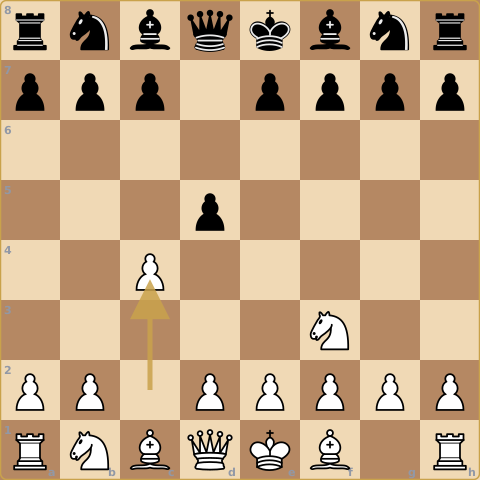
The Catalan-style main line: 2...e6
The single most flexible reply, Black supports the center while keeping every option open. White heads into a genuinely Catalan-style structure with 3.g3, adding long-range fianchetto pressure to the position, the same underlying idea behind the Catalan Opening itself.
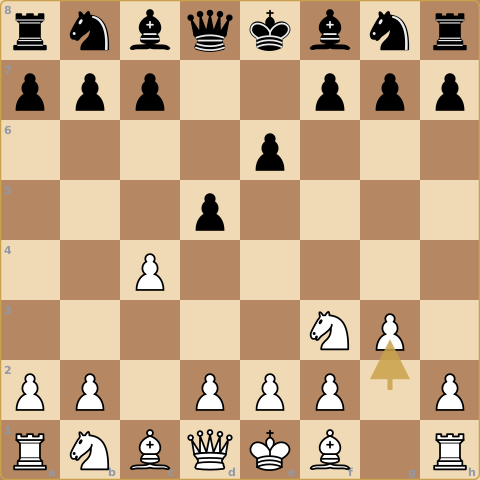
The Slav-style reply: 2...c6
Black supports the center with a pawn rather than a piece, echoing the same structural idea behind the Slav Defense. White responds with 3.e3, supporting the center and preparing to develop the last bishop, a solid, natural continuation.
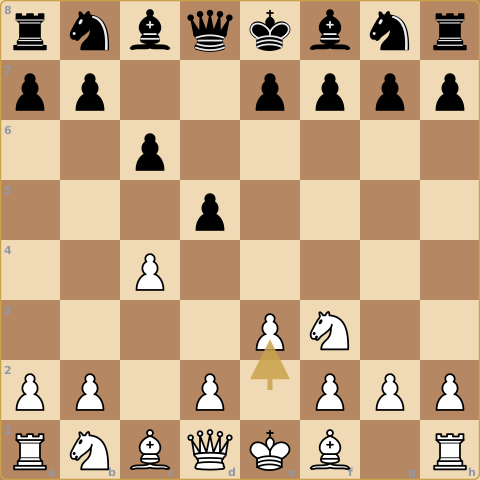
The ambitious try: 2...d4
Rather than maintaining the central tension, Black pushes forward immediately, gaining space. White meets this with 3.b4!, White's signature weapon against this whole structure.
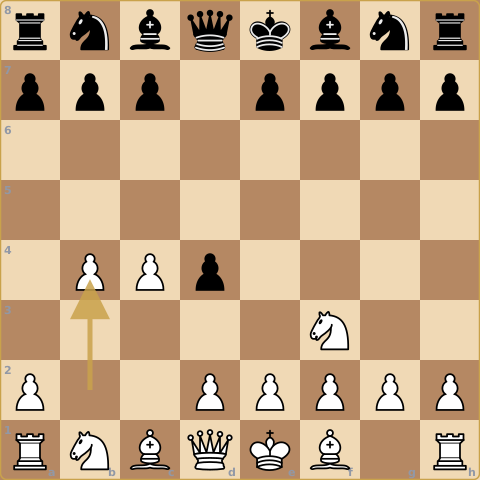
The point of 3.b4 is concrete, not just general queenside expansion. It stops Black from solidifying the advanced d4-pawn with ...c5 outright, since bxc5 would simply win the pawn if Black tried it. That gains real queenside space in its own right, but the deeper idea is preparing the double fianchetto: Bb2 lands directly on the a1-h8 diagonal, bearing straight down on the overextended pawn on d4, while Bg2 completes the hypermodern setup on the other flank. Between the bishop's direct pressure and White's extra space, d4 ends up more of a long-term weakness than an asset.
The immediate capture: 2...dxc4
This is the real Reti Gambit structure, Black resolves the tension right away by grabbing the pawn. White responds with 3.e3, preparing to recapture the pawn without rushing, a calm, principled way to regain the material without complications.
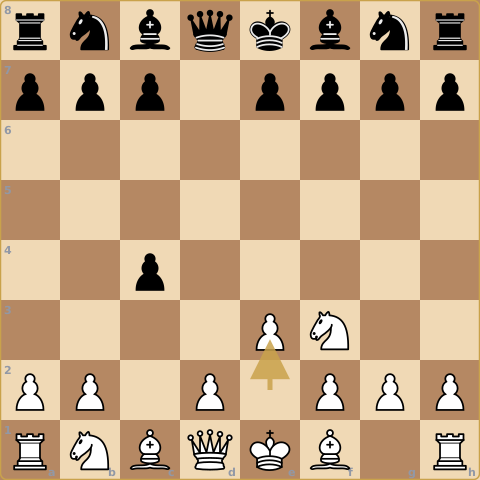
Black cannot safely try to hold onto the extra pawn with 3...b5?. After 4.a4 c6 5.axb5 cxb5, Black's queenside pawns are overextended and the rook on a8 is dangerously exposed. White's winning idea is to reroute the knight off f3, most simply with 6.Nd4! or 6.Ne5!, attacking b5 directly while clearing the way to follow up with Qf3 next, adding pressure down the long diagonal that the a8-rook can't easily escape. Trying to defend the extra pawn ends up costing Black a piece instead.
Strategic ideas in the Reti Opening
A handful of ideas repeat across this entire repertoire:
- 1.Nf3 is about genuine flexibility, not indecision. Developing before committing to a specific pawn structure keeps real options open, a Catalan-style setup, a Slav-style structure, or a genuine gambit, depending entirely on Black's own choices.
- The double fianchetto is White's universal hypermodern formation. b3/Bb2 and g3/Bg2 recur across this entire repertoire, controlling both long diagonals from a distance rather than occupying the center with pawns. It's the same underlying idea whether White is pressuring an overextended d4-pawn or just building quiet, long-term pressure.
- 2...dxc4 offers a genuine pawn, but White regains it calmly, or wins more if Black gets greedy. The so-called Reti Gambit isn't really a material sacrifice in the long run, 3.e3 recovers the pawn without rushing. Trying to hold onto it with 3...b5? backfires badly, leaving the a8-rook exposed and costing Black a piece.
- Black's specific second move meaningfully shapes the resulting structure. e6, c6, d4, and dxc4 each lead to real, different kinds of positions, recognizing which one is on the board matters more than having one fixed plan for all of them.
- This opening rewards comfort with delayed central commitment. Unlike 1.e4 or 1.d4 systems that stake an early central claim, the Reti's whole identity is patience, letting Black's own choices clarify the position before committing to a specific plan.
Who should play the Reti Opening?
The Reti Opening is a strong fit for players roughly 1000 to 2000 rated, with a style best described as flexible and positional. If you want a genuinely adaptable way to start the game as White, one with real, documented historical significance at the highest level, the Reti offers well-tested flexibility without demanding an early central commitment.
It's also a strong match if you enjoy openings built around genuine long-term strategic ideas rather than forcing lines, patient central control, well-timed pawn breaks like 3.b4, and a hypermodern approach that rewards understanding over memorization.
It's a weaker fit if you specifically want to stake an immediate, direct claim on the center, the Reti's whole identity is delayed commitment and flexibility, not an early central confrontation the way 1.e4 or 1.d4 can be.
Common mistakes in the Reti Opening
- Treating 1.Nf3 as a move without a real plan. Its flexibility is a genuine strategic asset. Real, well-tested responses exist for all of Black's major replies, not just a vague "wait and see" approach.
- Rushing to regain the pawn in the Reti Gambit line. 3.e3 recovers the material calmly and without complications. There's no need to force anything faster than that.
- Trying to hold onto the extra pawn in the Reti Gambit with 3...b5?. It looks like a way to keep the material, but 4.a4 c6 5.axb5 cxb5 leaves the a8-rook exposed, and White wins a piece rerouting the knight off f3 before following up with Qf3.
- Ignoring the opening's heavy transposition potential. Depending on how both sides continue, Reti Opening positions can resemble the Catalan, the English, or the Slav, recognizing these connections matters as much as knowing the Reti's own independent lines.
- Treating all four of Black's replies as requiring the same response. e6, c6, d4, and dxc4 are genuinely different tries, knowing which one is actually on the board matters more than having one fixed reaction ready for all of them.
Frequently asked questions
Is the Reti Opening good for beginners?
It's a strong fit for players roughly 1000 to 2000. Its appeal is genuine flexibility and a clear, adaptable plan rather than sharp forced tactics, though its heavy transposition potential rewards some familiarity with the openings it can transpose into.
Why is it called the Reti Opening?
It's named after Richard Réti, one of the founders of the hypermodern school of chess. He used this exact opening to defeat reigning World Champion José Raúl Capablanca at the 1924 New York tournament, ending an eight-year unbeaten streak.
What is the Reti Gambit?
It's the structure that arises after 2...dxc4, where Black grabs the pawn immediately. Despite the name, White regains the material calmly with 3.e3 rather than needing to force anything through complications. Trying to hold onto the extra pawn instead with 3...b5? backfires badly, exposing the a8-rook and losing a piece.
How many different replies does Black have against the Reti Opening?
Four genuinely major ones show up with real frequency in the data behind this repertoire: 2...e6 (heading into Catalan-style structures), 2...c6 (Slav-style), 2...d4 (an ambitious central push), and 2...dxc4 (the Reti Gambit). This repertoire covers all four with real, tested continuations.
Did the Reti Opening really beat a World Champion?
Yes, this is one of the most famous games in chess history. Richard Réti used this exact opening to defeat José Raúl Capablanca at the 1924 New York tournament, ending Capablanca's eight-year unbeaten streak and his first loss since becoming World Champion.
Practice every real line against master-game replies, with a plain-English explanation on every move.
Practice Reti Opening free →