The Queen's Indian Defense: A Complete Guide
The Queen's Indian Defense arises after 1.d4 Nf6 2.c4 e6 3.Nf3 b6. It's one of the most flexible, most respected hypermodern answers to 1.d4. Rather than contesting the center with a pawn, Black fianchettoes the light-squared bishop and fights for it with pieces from a distance. This guide covers a complete Black repertoire, built from 25,728 real, individually validated games across three combined datasets, answering all of White's genuinely major systems.
Quick facts
| Moves | 1.d4 Nf6 2.c4 e6 3.Nf3 b6 |
| Played as | Black |
| Best for | Roughly 1400–2200 rated players |
| Style | Positional |
| Games analyzed | 25,728 real, individually validated games across three combined datasets |
| Lines covered here | 20 |
What is the Queen's Indian Defense?
After 1.d4 Nf6 2.c4 e6 3.Nf3, Black plays 3...b6, preparing to fianchetto the light-squared bishop and control the long diagonal from a distance rather than occupying the center directly with a pawn. This is a genuine hypermodern idea, closely related to the Nimzo-Indian Defense but reached through a slightly different move order and built around a different bishop's development.
The resulting positions reward genuine positional understanding. Black isn't fighting for a specific pawn structure so much as fighting for influence over key central squares, using active piece placement rather than direct pawn confrontation.
How to play the Queen's Indian Defense: move by move
Every line below starts 1.d4 Nf6 2.c4 e6 3.Nf3 b6. From here, White has several genuinely major systems in the real-game data, and this repertoire answers each with real, tested continuations.
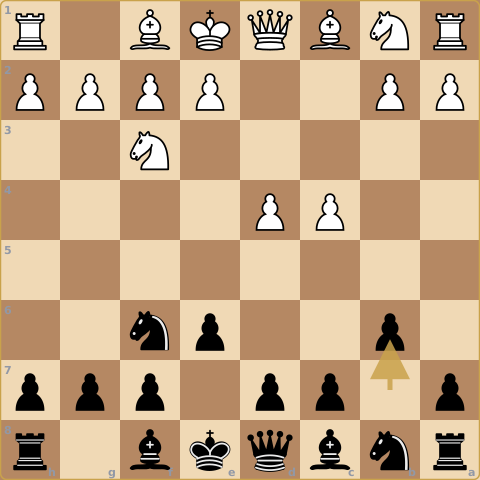
The Fianchetto Variation: 4.g3
The most theoretically important system, White mirrors Black's own plan, fianchettoing onto the same long diagonal Black's bishop is heading for. Black's sharpest response is 4...Ba6!, the Nimzowitsch Variation, immediately challenging White's plan by attacking the c4 pawn.
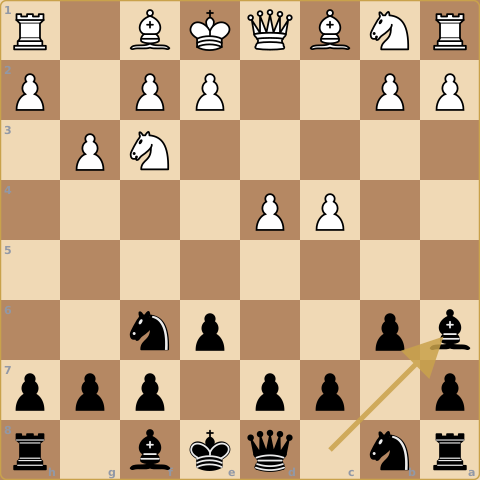
The reason 4...Ba6 works so well specifically here comes down to timing. White's light-squared bishop is already committed to g2, so it can never come to the rescue and defend c4 directly. That leaves White with only awkward ways to protect the pawn, each one a real concession. 5.b3 defends with a pawn but permanently weakens the light squares around White's own position. 5.Nbd2 defends with a knight but blocks in the dark-squared bishop on c1. 5.Qc2 and 5.Qa4 both defend with the queen, but bring it out early where it can become a target for further harassment. Whichever White chooses, Black has already forced a concession before White's even finished developing.
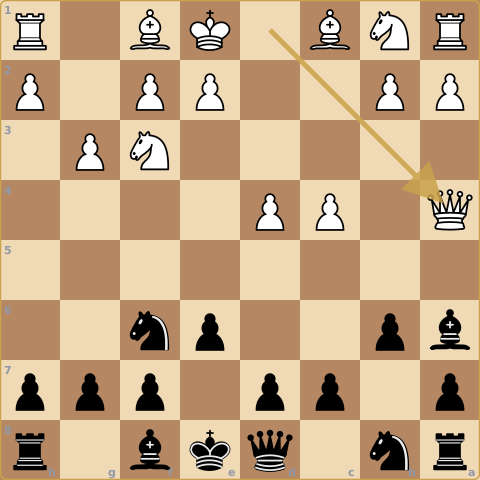
Of the four, 5.Qa4 is the sharpest: it defends c4 while simultaneously attacking the bishop on a6 along the file, a genuine double-purpose move.
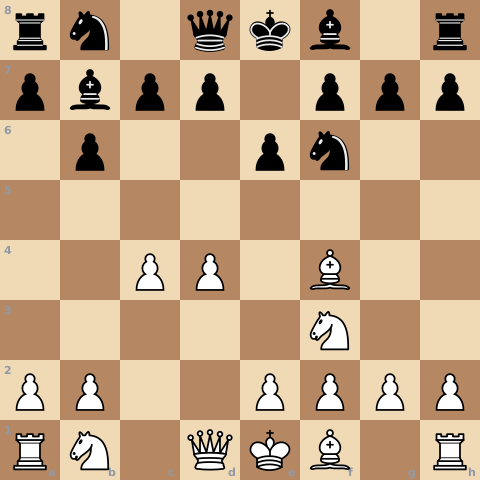
The Classical Variation: 4.Bf4 and 4.Bg5
Rather than fianchettoing, White develops a bishop actively outside the pawn chain first, the same underlying idea behind the London System and Torre Attack, just reached here against a Queen's Indian structure. Black responds simply: 4...Bb7, developing onto the usual diagonal without needing the sharper 4...Ba6 idea that specifically targets an early g3.
The Classical, Quiet Line: 4.e3
A quieter, more solid approach, White supports the center modestly rather than committing to a specific piece-development plan right away. Black meets this the same way: 4...Bb7, developing onto the standard diagonal and keeping the position flexible regardless of White's quieter setup.
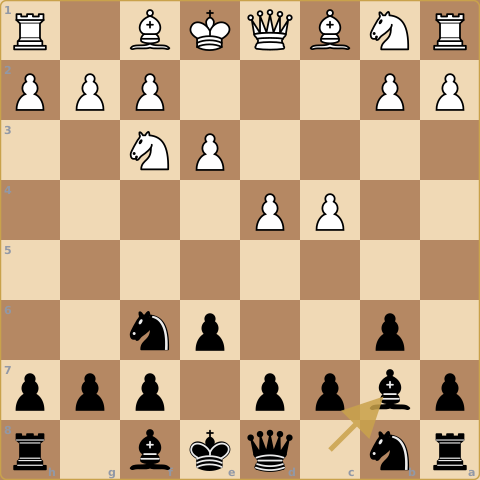
Worth clarifying, since the name gets misapplied often: the true Petrosian System is actually 4.a3, not 4.e3. Named for Tigran Petrosian, it's a prophylactic move that rules out ...Bb4 before it can even happen, clearing the way for White to follow up with Nc3 and e4 without ever worrying about that pin. 4.e3 is better described as a classical, quiet line in its own right.
Strategic ideas in the Queen's Indian Defense
A handful of ideas repeat across all of White's systems:
- ...b6 fights for the center with a piece, not a pawn. This is the entire hypermodern point of the opening, influence over key central squares matters more than physical pawn occupation.
- The battle for the e4-square is the deeper point behind the whole queenside fianchetto. Controlling e4 with the bishop on b7 is the immediate goal, but the plan often goes further: a knight lands on ...Ne4, and Black reinforces it with ...f5, turning a single controlled square into a genuinely dominant outpost.
- 4...Ba6 is a real attack, not just an aggressive-looking placement. Against the Fianchetto Variation specifically, the bishop genuinely attacks White's c4 pawn at a moment when White's own light-squared bishop can't come back to defend it.
- White's four ways to defend c4 lead to genuinely different positions. Whether White defends with a pawn, the queen, or a knight changes the resulting middlegame meaningfully, recognizing which defense White has chosen matters more than having one fixed follow-up plan.
- Against the Classical and quiet 4.e3 systems, the simpler 4...Bb7 is correct. The sharper 4...Ba6 idea specifically targets an early g3, playing it against a system that hasn't committed to that plan wastes the tactical point it's built around.
- This opening rewards genuine positional understanding over forced sequences. Unlike some sharper defenses, the Queen's Indian's main appeal is fighting for central influence with active pieces, not memorizing long forcing lines.
Who should play the Queen's Indian Defense?
The Queen's Indian Defense is a strong fit for players roughly 1400 to 2200 rated, with a style best described as positional. If you want a flexible, hypermodern way to meet 1.d4 that fights for the center with pieces rather than committing to a specific pawn structure immediately, the Queen's Indian is one of the most respected ways to do it.
It's also a strong match if you already play or are considering the Nimzo-Indian Defense, both openings share a related hypermodern philosophy, and the pattern-recognition from one often transfers into the other.
It's a weaker fit if you specifically want a sharp, forcing opening built around memorized tactical sequences, while the 4...Ba6 line against the Fianchetto Variation does get genuinely sharp, the Queen's Indian's overall identity is positional flexibility, not forced complications.
Common mistakes in the Queen's Indian Defense
- Playing 4...Ba6 against systems other than the Fianchetto Variation. This sharper try specifically targets an early g3, using it against the Classical Variation (4.Bf4 or 4.Bg5) or the quiet 4.e3 line, where White hasn't fianchettoed, wastes the tactical point it depends on.
- Assuming all four of White's ways to defend c4 lead to the same position. b3, Qc2, Qa4, and Nbd2 are genuinely different responses with different follow-up plans, treating them interchangeably means missing real, specific opportunities in each.
- Underestimating Qa4's double purpose. It doesn't just defend the pawn, it also genuinely attacks the bishop on a6 at the same time, a real tactical point worth recognizing rather than assuming the queen move is purely defensive.
- Treating the opening as purely tactical. The Queen's Indian's real strength is positional and flexible, leaning too hard into forcing lines everywhere misses what makes the opening sound in the first place.
Frequently asked questions
Is the Queen's Indian Defense good for beginners?
It's a strong fit slightly above absolute-beginner level, rated well for roughly 1400 to 2200. Its appeal is genuine positional flexibility rather than sharp forced tactics, though the 4...Ba6 line against the Fianchetto Variation does reward some real tactical awareness.
What is 4...Ba6 in the Queen's Indian Defense?
It's Black's sharpest response to White's Fianchetto Variation (4.g3), the Nimzowitsch Variation, a bishop move that immediately attacks White's c4 pawn at a moment when White's own bishop, already committed to g2, has no way back to defend it. White has four real, distinct ways to defend the pawn instead, each one a genuine concession.
What's the difference between the Fianchetto, Classical, and Petrosian systems?
The Fianchetto Variation (4.g3) mirrors Black's own plan and is met with the sharp 4...Ba6. The Classical Variation (4.Bf4 or 4.Bg5) and the quiet 4.e3 line are both met with the simpler, more standard 4...Bb7, since neither commits to the early g3 that makes 4...Ba6 tactically relevant. The true Petrosian System is actually 4.a3, a prophylactic move that rules out ...Bb4 before continuing with Nc3 and e4, worth knowing since the name gets misapplied to 4.e3 fairly often.
Is the Queen's Indian Defense similar to the Nimzo-Indian Defense?
Yes, closely, both are hypermodern replies to 1.d4 that fight for the center with pieces rather than pawns, and many players study them together, since the underlying strategic philosophy carries over between the two.
Does Qa4 really attack the bishop in the Queen's Indian's sharp line?
Yes. After 4...Ba6, White's 5.Qa4 both defends the c4 pawn and genuinely attacks the bishop on a6 along the a-file at the same time, a real double-purpose move rather than a simple defensive choice.
Practice every real line against master-game replies, with a plain-English explanation on every move.
Practice Queen's Indian Defense free →