The English Opening: A Complete Guide
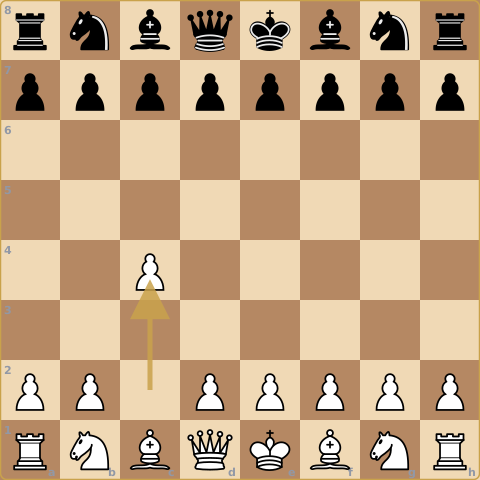
The English Opening begins 1.c4. It's one of the most flexible, most respected ways for White to start a game. Rather than committing to a specific central structure immediately, White controls the center from the flank and keeps nearly every future structure available. This guide covers a complete White repertoire, built from 111,508 real, individually validated games across seven combined datasets, answering all four of Black's genuinely major replies.
Quick facts
| Moves | 1.c4 |
| Played as | White |
| Best for | Roughly 1000–2000 rated players |
| Style | Flexible, positional |
| Games analyzed | 111,508 real, individually validated games across seven combined datasets |
| Lines covered here | 37 |
What is the English Opening?
Most first moves for White commit to a specific plan right away. 1.e4 fights for the center directly, and 1.d4 does too. 1.c4 does something different: it controls the center from the side, transposing potentially into Reversed Sicilian, King's Indian, Queen's Gambit, or Nimzo/Queen's-Indian-flavored positions depending entirely on how Black replies. This flexibility is the English's whole identity. White isn't committing to a specific structure this early, keeping options open until Black's own choices clarify the position.
This isn't just a flexible try. It has real, documented World Championship pedigree at the highest possible stakes. Garry Kasparov used the English Opening to win the decisive 24th and final game of his 1987 World Championship match against Anatoly Karpov, coming back from a one-point deficit to retain his title in the process. That's about as significant a single-game endorsement as any opening in chess can claim.
How to play the English Opening: move by move
Every line below starts 1.c4. From here, Black has four genuinely major replies in the real-game data, and this repertoire answers each with real, tested continuations.
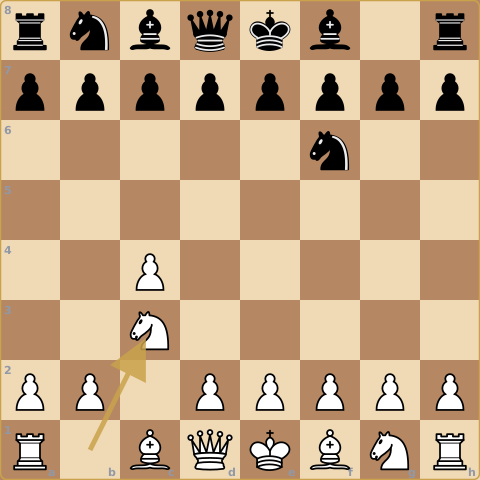
The Anglo-Indian: 1...Nf6
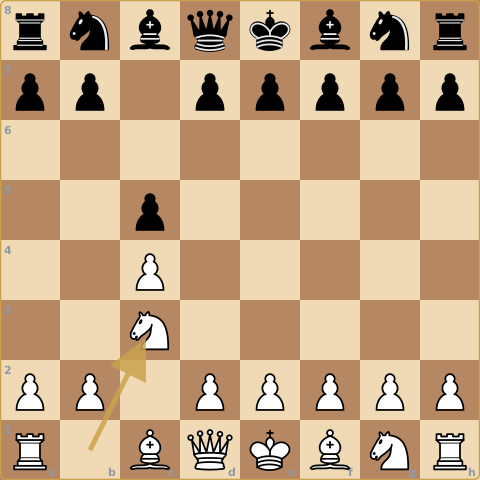
The single most common reply, Black develops naturally while keeping every option open, rather than committing to a specific central structure immediately. White responds the same way: 2.Nc3, developing naturally and keeping the center flexible, matching Black's own flexible approach rather than forcing a confrontation.
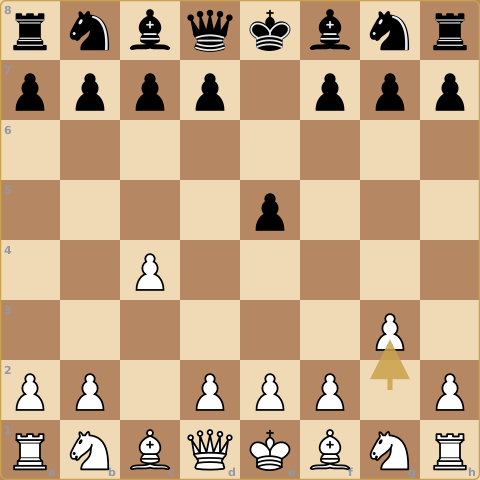
The Reversed Sicilian: 1...e5
Black meets the flank opening with a central pawn of Black's own, effectively playing a Sicilian Defense with an extra tempo and reversed colors. That extra tempo matters in practice, not just in theory: in a real Sicilian, Black spends several moves maneuvering before a queenside pawn storm gets going, but here White is a full tempo ahead of that same plan. Ideas like a3, Rb1, and b4 can arrive quickly, often before Black has even finished coordinating a response on the other wing.
White heads into the King's English with 2.g3, an early fianchetto that keeps the position flexible while adding real, long-term pressure on the long diagonal. A related, reliable setup worth knowing is the Botvinnik System: pawns on c4, d3, and e4 supported by a knight on e2 (reaching it via Nge2 rather than Nf3, keeping the f-pawn free), a fortress-like structure that's held up well across generations of practice.
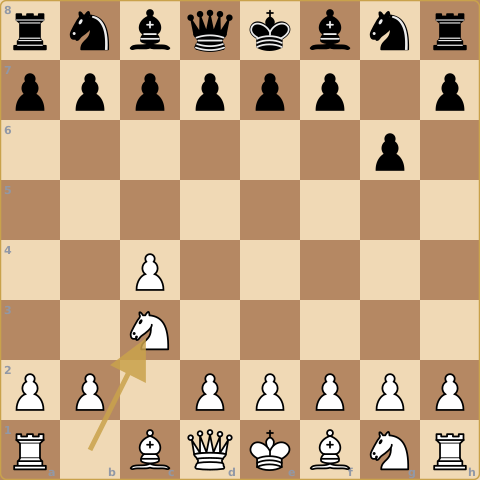
The immediate fianchetto: 1...g6
Rather than developing a knight or striking centrally, Black fianchettoes right away, keeping options flexible about the rest of the position. White continues the same way many of this repertoire's lines begin: 2.Nc3, developing naturally before deciding on a specific central plan.
The Symmetrical Variation: 1...c5
Black meets the flank opening symmetrically, mirroring White's own first move. White responds with 2.Nc3, again developing naturally rather than resolving the symmetry immediately, keeping every future structural option available.
Strategic ideas in the English Opening
A handful of ideas repeat across all four of Black's replies:
- 1.c4 is about flexibility, not passivity. The whole point of controlling the center from the flank is keeping multiple structures available, this is a genuine strategic choice, not a sign of avoiding a real fight for the center.
- Domination of d5 is the deeper strategic point behind White's flank setup. The combination of c4, Nc3, and a fianchettoed Bg2 isn't just natural development, all three genuinely bear on the d5 square at once. Establishing that kind of control lets White dictate play across the light squares for the rest of the game, not just contest the center passively from a distance.
- The English transposes unusually heavily into other openings. Depending on how both sides continue, positions can resemble the Reversed Sicilian, the King's Indian, the Queen's Gambit, or Nimzo/Queen's-Indian structures, recognizing these transpositions matters as much as knowing the English's own independent lines.
- This opening has genuine, documented World Championship pedigree. Kasparov's use of it to win the decisive final game of an actual World Championship match is a meaningfully different kind of endorsement than an opening merely being "considered sound."
- Developing naturally before committing to a central plan is the recurring theme. Nc3 appears as White's response to three of Black's four major replies, reflecting the same underlying philosophy of flexibility that defines the whole opening.
- Black's specific reply genuinely shapes which structure the game heads toward. The Anglo-Indian, Reversed Sicilian, immediate fianchetto, and Symmetrical Variation are all real, different plans, recognizing which one is on the board matters more than having one fixed response to all of them.
Who should play the English Opening?
The English Opening is a strong fit for players roughly 1000 to 2000 rated, with a style best described as flexible and positional. If you want a genuinely adaptable way to start the game as White, one that keeps multiple structures available rather than committing early, the English offers real, well-tested flexibility backed by one of the largest real-game datasets on this site.
It's also a strong match if you're drawn to openings with real, documented elite pedigree at the highest possible stakes, Kasparov's use of it to win a decisive World Championship game is about as serious an endorsement as exists in chess.
It's a weaker fit if you specifically want a direct, forcing fight for the center from move one, the English's whole identity is flexibility and delayed commitment, not an immediate central confrontation the way 1.e4 or 1.d4 can be.
Common mistakes in the English Opening
- Treating 1.c4 as a passive, low-ambition move. Its flexibility is a genuine strategic asset, not a sign of avoiding a real fight, real, well-tested chances for an advantage exist across all of Black's major replies.
- Ignoring the opening's heavy transposition potential. The English can head into structures resembling several other openings entirely, playing on autopilot without recognizing which structure has actually arisen can mean missing plans that are already familiar from elsewhere.
- Treating all four of Black's replies as requiring the same response. The Anglo-Indian, Reversed Sicilian, immediate fianchetto, and Symmetrical Variation are genuinely different plans, knowing which one is actually on the board matters more than having one fixed reaction ready for all of them.
- Underestimating the Reversed Sicilian's extra tempo. Black's 1...e5 genuinely mirrors a real Sicilian Defense structure, just with colors and a tempo reversed, and that extra tempo means White's own queenside storm, a3, Rb1, and b4, can arrive before Black manages the equivalent plan in a real Sicilian. Treating the position as completely unrelated to that structure misses real, transferable understanding.
Frequently asked questions
Is the English Opening good for beginners?
It's a strong fit for players roughly 1000 to 2000. Its appeal is genuine flexibility and a clear, adaptable plan rather than sharp forced tactics, though its heavy transposition potential rewards some familiarity with the openings it can transpose into.
Did Kasparov really use the English Opening at World Championship level?
Yes, he used it to win the decisive 24th and final game of his 1987 World Championship match against Anatoly Karpov, coming back from a one-point deficit to retain his title in one of the most significant single games in chess history.
What is the Reversed Sicilian?
It's the structure that arises after 1.c4 e5, effectively a Sicilian Defense with colors and a tempo reversed, since White's c4 and Black's e5 mirror the roles each side would normally play in a real Sicilian. That extra tempo is a genuine practical asset: White can carry out standard Sicilian-style plans, like a queenside pawn storm with a3, Rb1, and b4, a full move faster than Black ever could as the real Sicilian's attacker.
How many different replies does Black have against the English Opening?
Four genuinely major ones show up with real frequency in the data behind this repertoire: 1...Nf6 (the Anglo-Indian), 1...e5 (the Reversed Sicilian), 1...g6 (an immediate fianchetto), and 1...c5 (the Symmetrical Variation). This repertoire covers all four with real, tested continuations.
Can the English Opening transpose into other openings?
Yes, heavily. Depending on how both sides continue, English Opening positions can resemble the King's Indian, the Queen's Gambit, or Nimzo/Queen's-Indian structures. This transposition potential is a real, deliberate feature of the opening's flexibility, not an accident.
Practice every real line against master-game replies, with a plain-English explanation on every move.
Practice English Opening free →