About

The method, not the marketing.

Most opening courses are one strong player's opinion, formatted nicely. This isn't that. Here's exactly how this site was actually built, so you can decide for yourself whether to trust it.

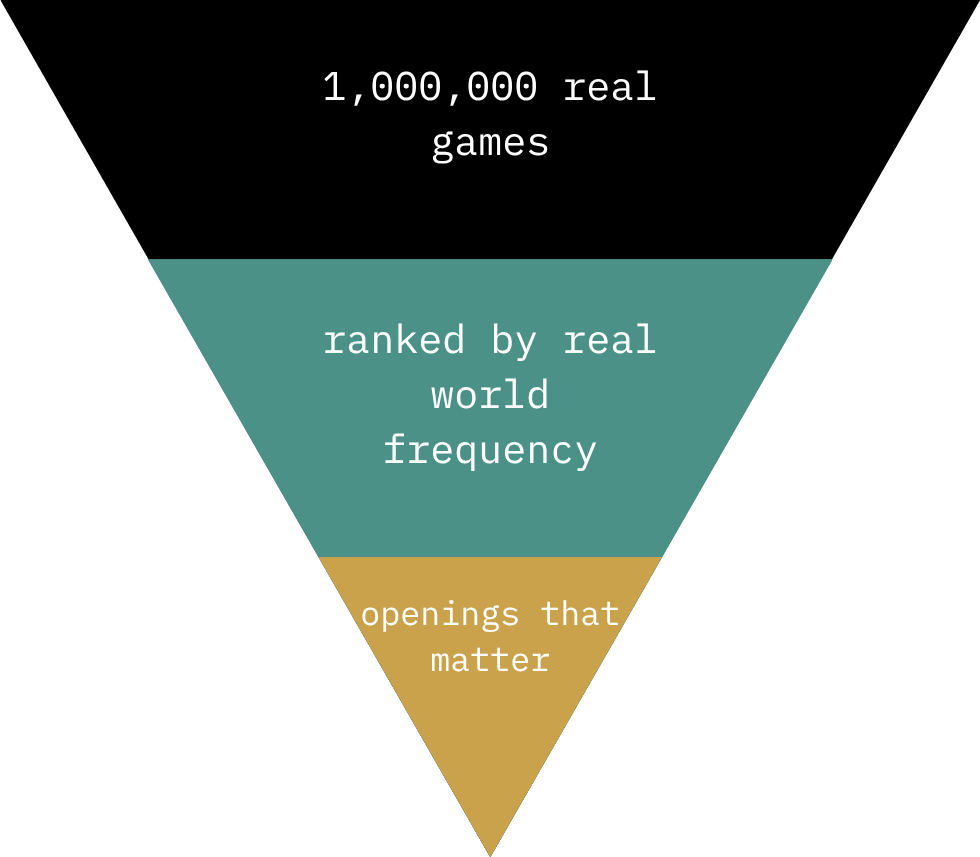
A funnel diagram showing 1,000,000 real games narrowing down through ranking by real-world frequency to the 36 openings that matter

Where the openings came from

We didn't pick 36 openings because they're famous, or because they're the ones a strong player happens to like. We started from over 1,000,000 real games, pulled from real players at real ratings, and asked a specific question of the data: which openings and variations actually show up, over and over, at the rating bands people here are actually playing at?

That's the whole selection process. No opinion, no "this is objectively best" claims, no chasing whatever's fashionable at grandmaster level this year. If a line made the cut, it's because it genuinely shows up often enough in real games to be worth your study time. If it didn't, it's not here, regardless of how well-known it might be.
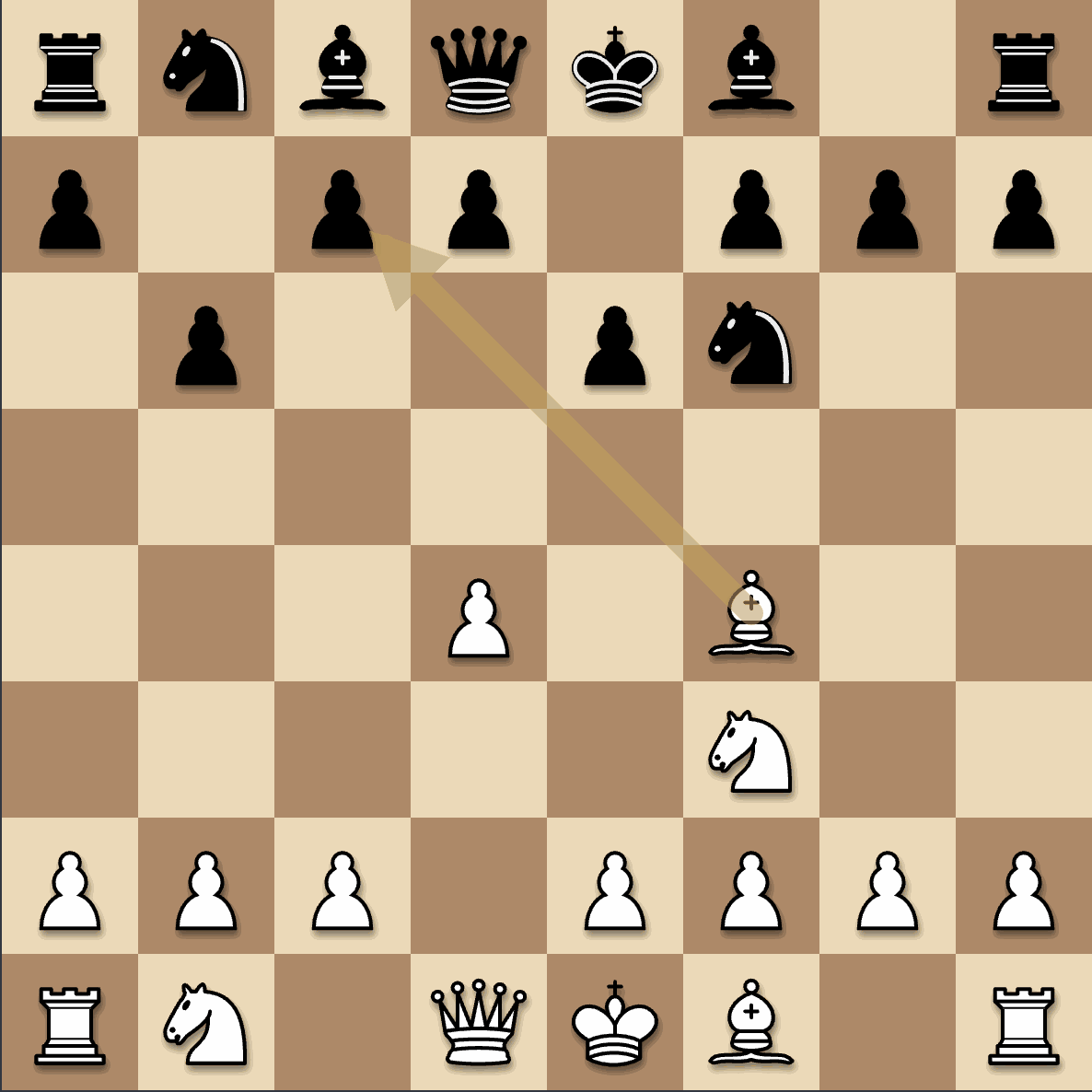
A chess board showing the practice tool's hint feature: a gold arrow pointing from a bishop to the exact square it should move to, illustrating a tactical claim checked against a real engine

Why every line is engine-verified

Opening theory is full of claims that sound right and aren't. "This move pins the knight." "That pawn is hanging." "White is winning material here." A lot of that language gets repeated from book to book, decade to decade, without anyone actually rechecking whether it's still true in the exact position being described.

We check. Every tactical claim on this site, every pin, every attack, every "this wins a pawn," is verified directly against a real chess engine before it ships, not assumed because it sounded plausible while writing it. When a claim turns out to be wrong during that process, it gets fixed, not left in because rewriting is inconvenient. That's not a one-time pass either. It's an ongoing standard this whole project holds itself to.

Your move: Play Bishop to b4 (Bb4)! Why this move? The most natural, most common response, 65%, matching White's development move for move and heading toward genuine Four Knights territory. The main try here, 36%, transposing into a genuine Four Knights, Spanish Variation structure with real, well-tested theory of its own. real percentages behind every move, not vibes

Why explanations, not just moves

A list of correct moves without reasons is only useful until your opponent deviates from the list. Every move in every line here comes with a plain-English reason: what it accomplishes, why it's the right response to what just happened, and what changes if the position looks slightly different. The goal isn't memorization. It's understanding good enough that you're not lost the moment someone plays something you haven't seen before.

"This line is completely winning." "Kasparov definitely said this." "300 openings, so you're covered." 36 that genuinely matter beats 300 that don't

What we won't do

  • We won't claim a line is "winning" when the honest answer is "roughly equal, but a reasonable, well-tested choice."
  • We won't attribute a game, a quote, or a result to a famous player without checking it actually happened that way.
  • We won't pad this site with hundreds of openings you'll never actually face, just to look comprehensive. Thirty that matter beats three hundred that don't.
See it for yourself.

Every line on this site is free to practice during open beta, no credit card, no catch.

Start free →